WOVEN FORWARD: in conversation with rhesa paul.
Through her signature palette of blues, fine artist Rhesa Paul traces her West Indian heritage—transforming the language of basketry and woven forms into an ode to a craft generations-old.
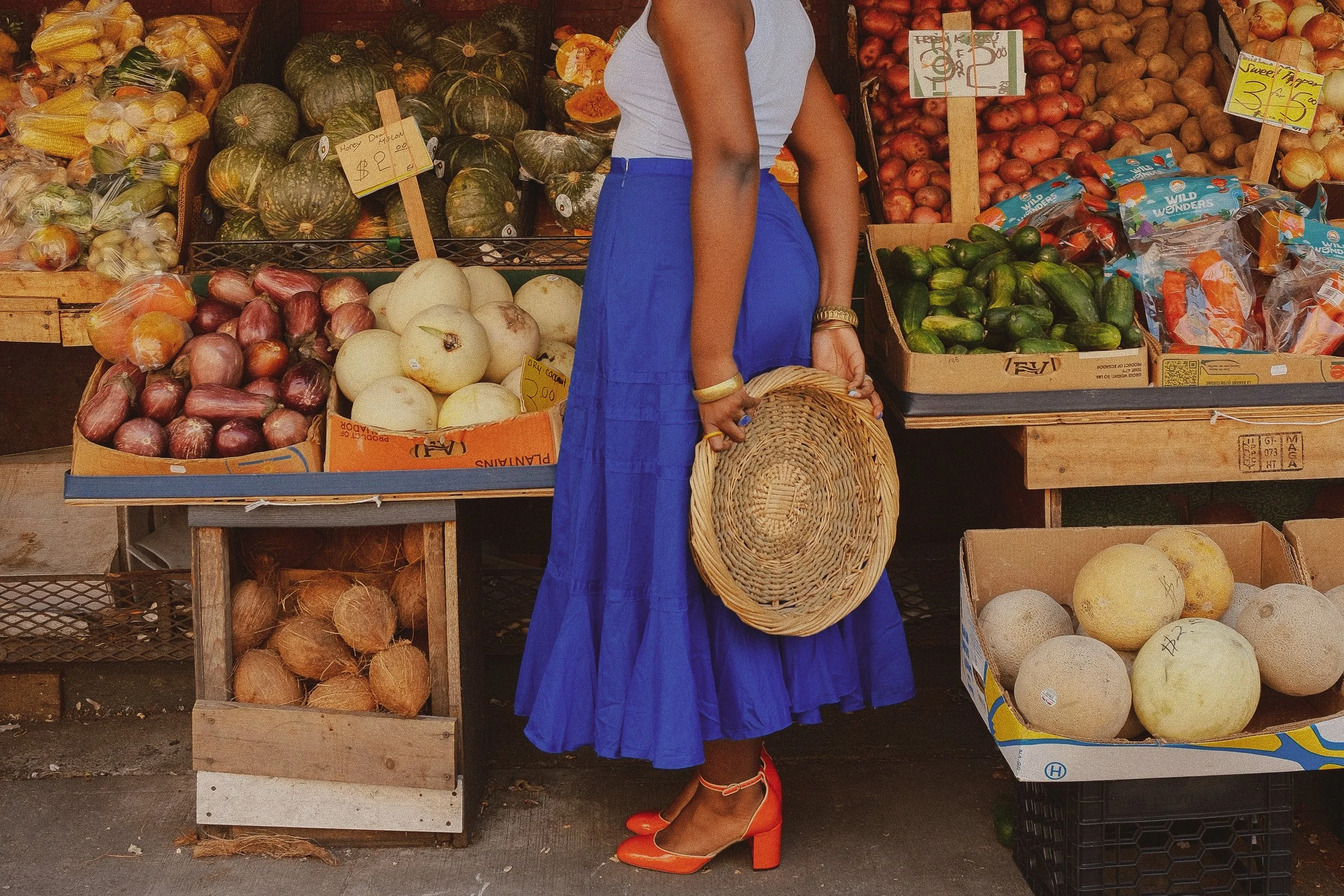
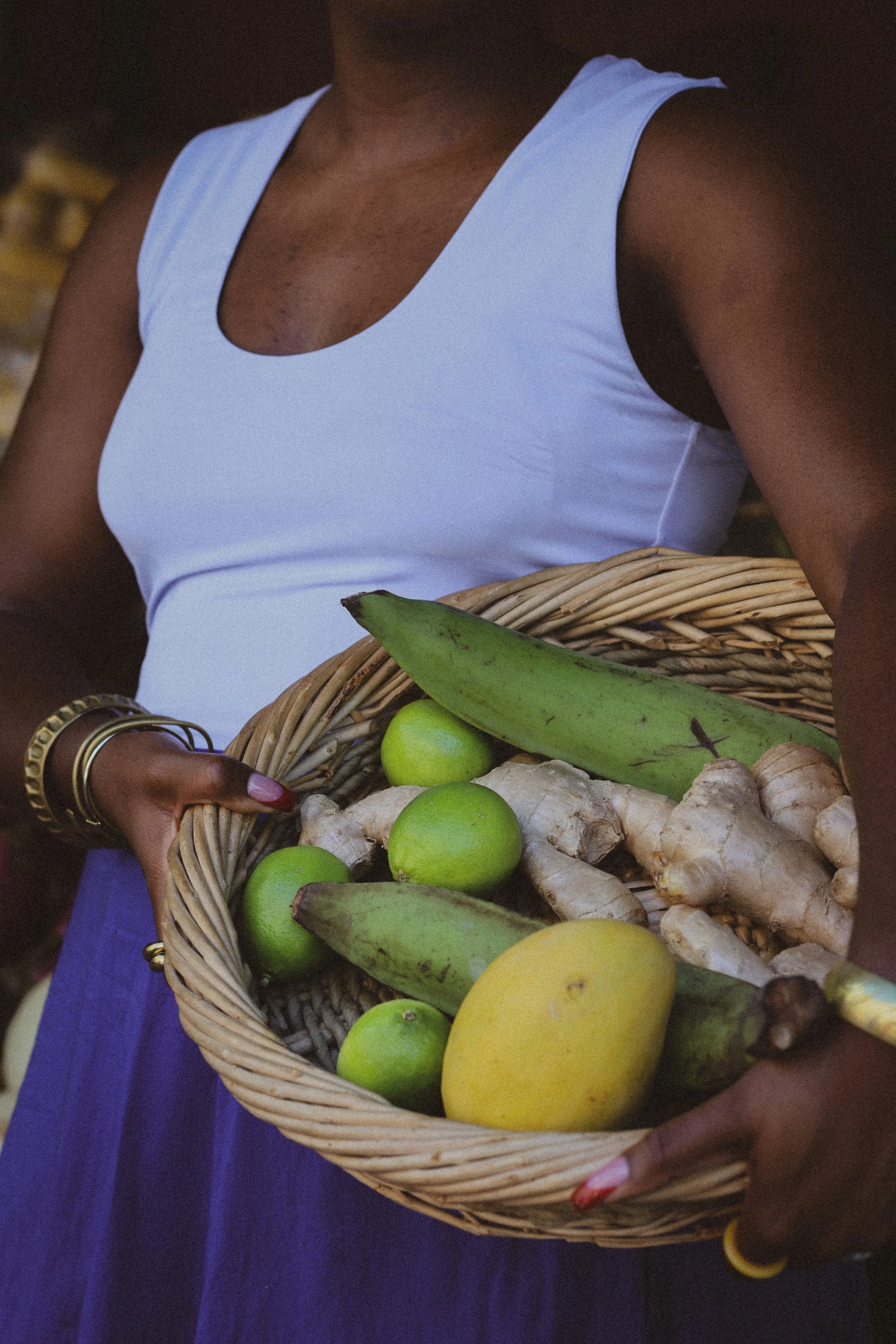
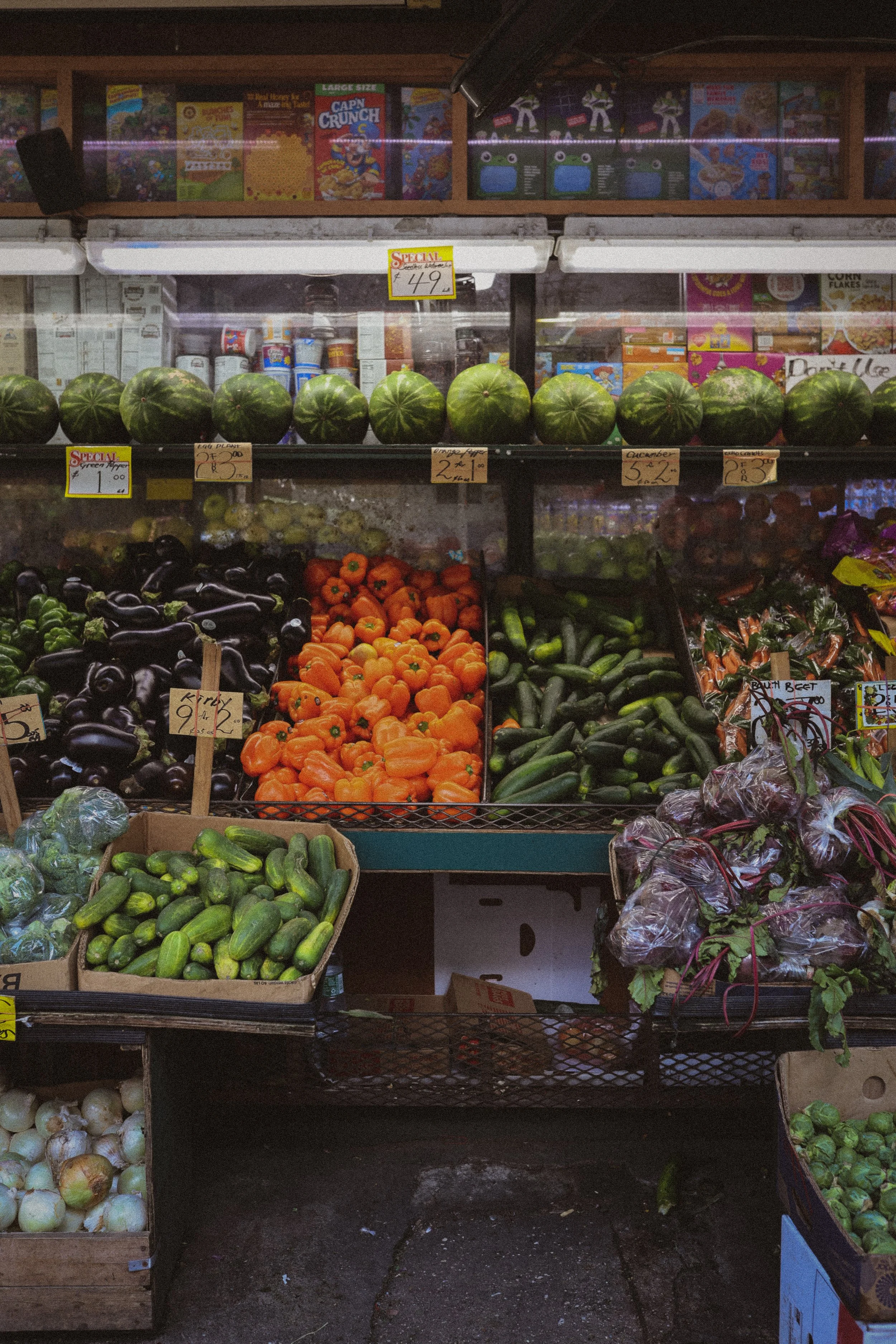
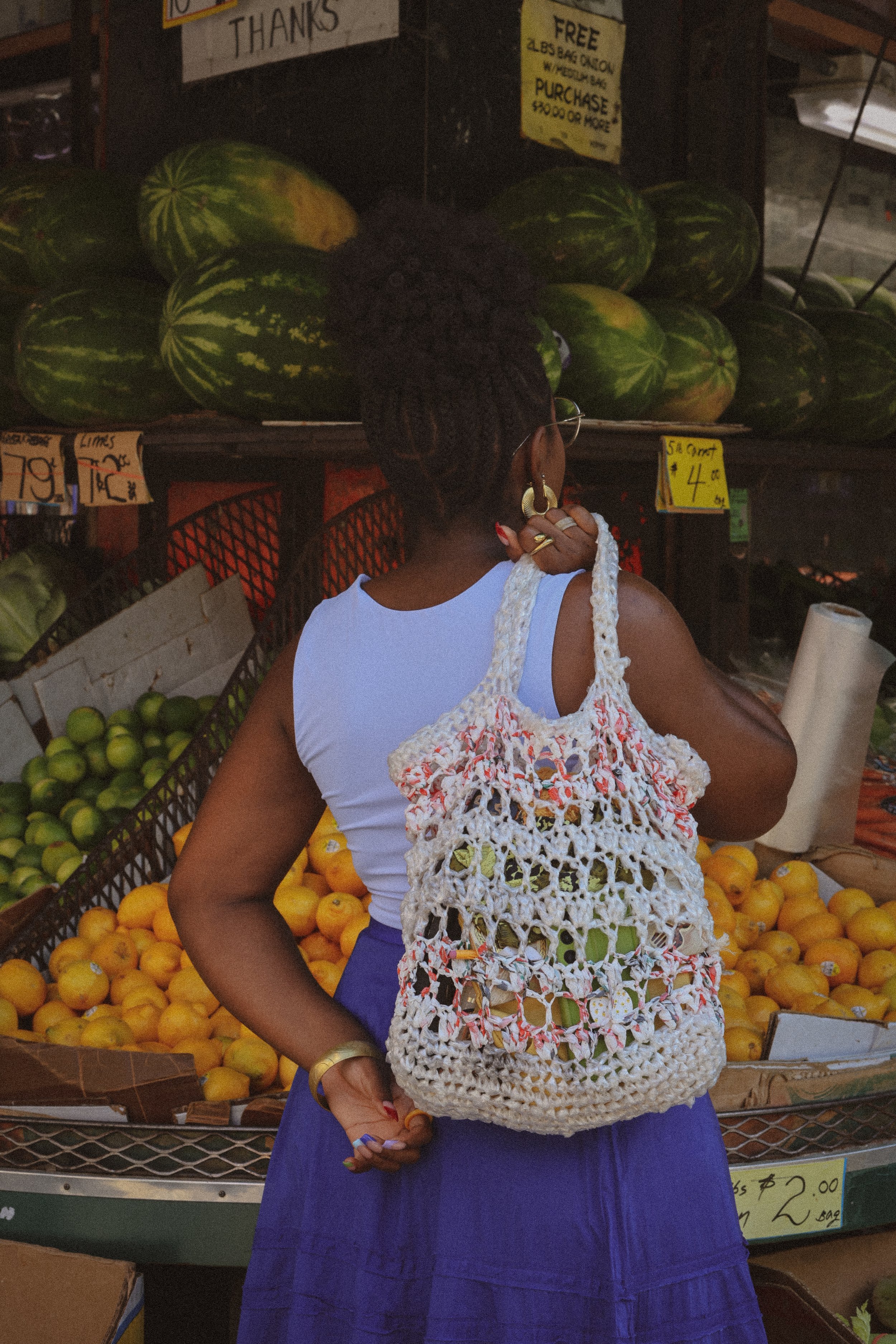
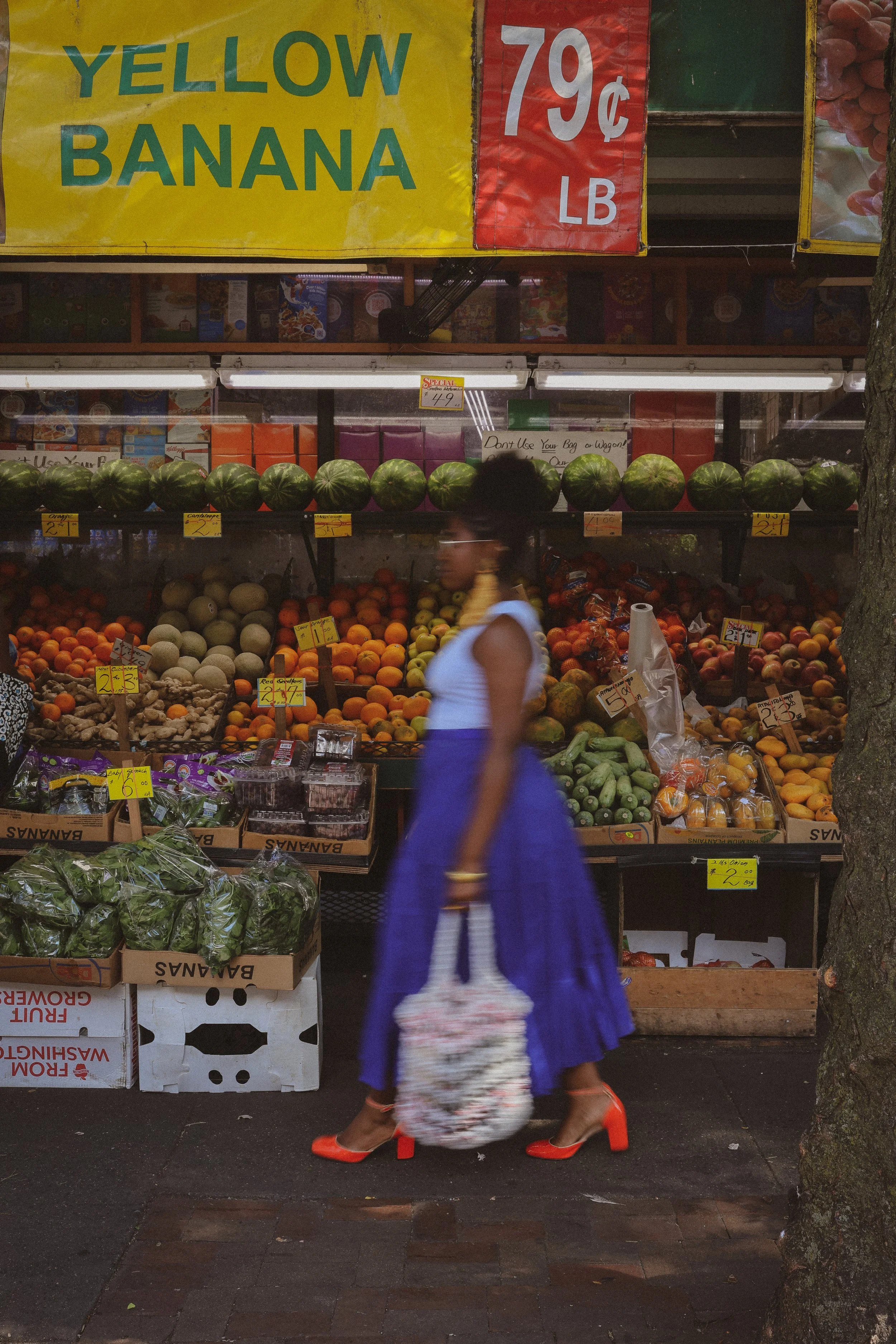
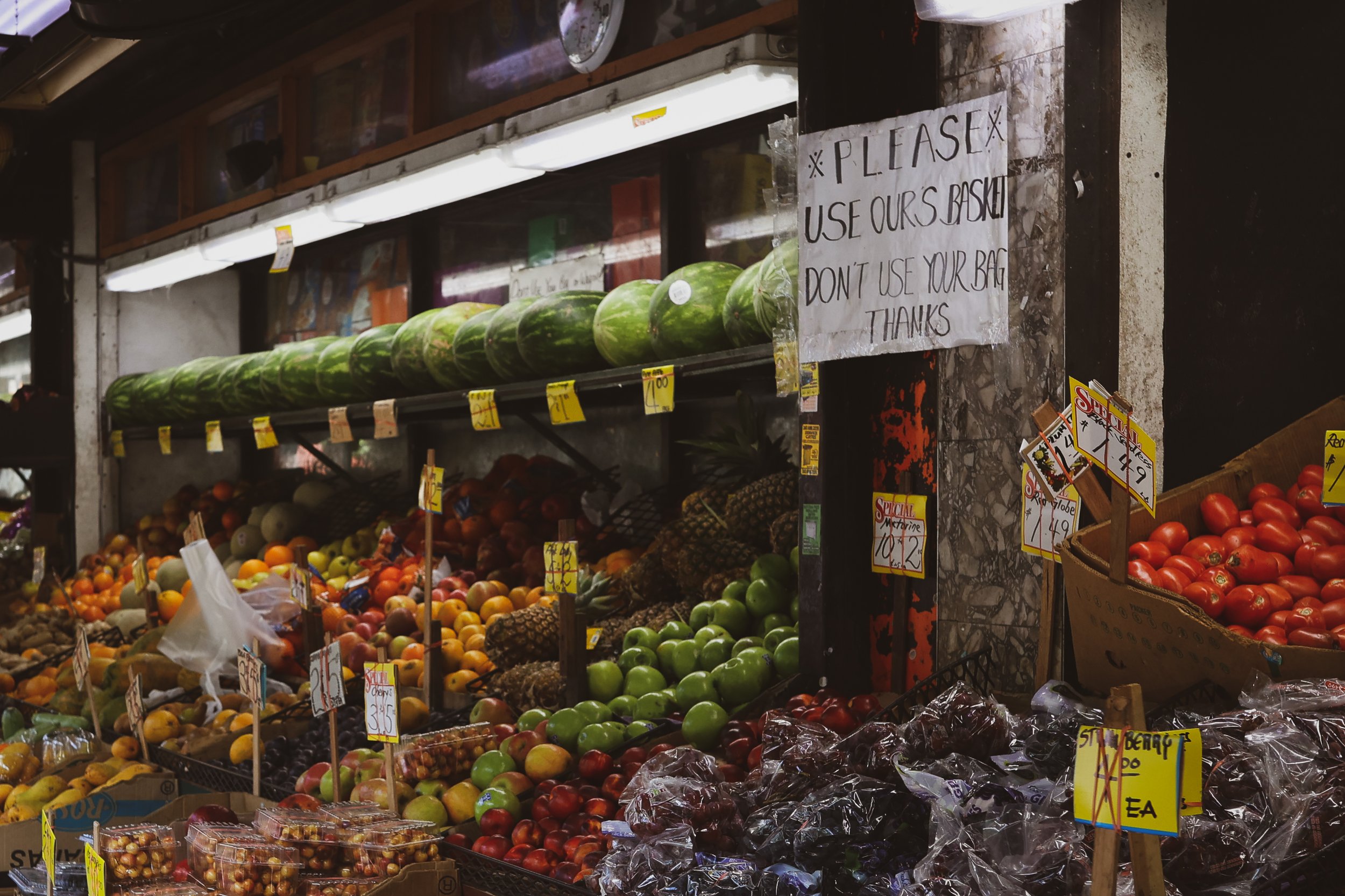
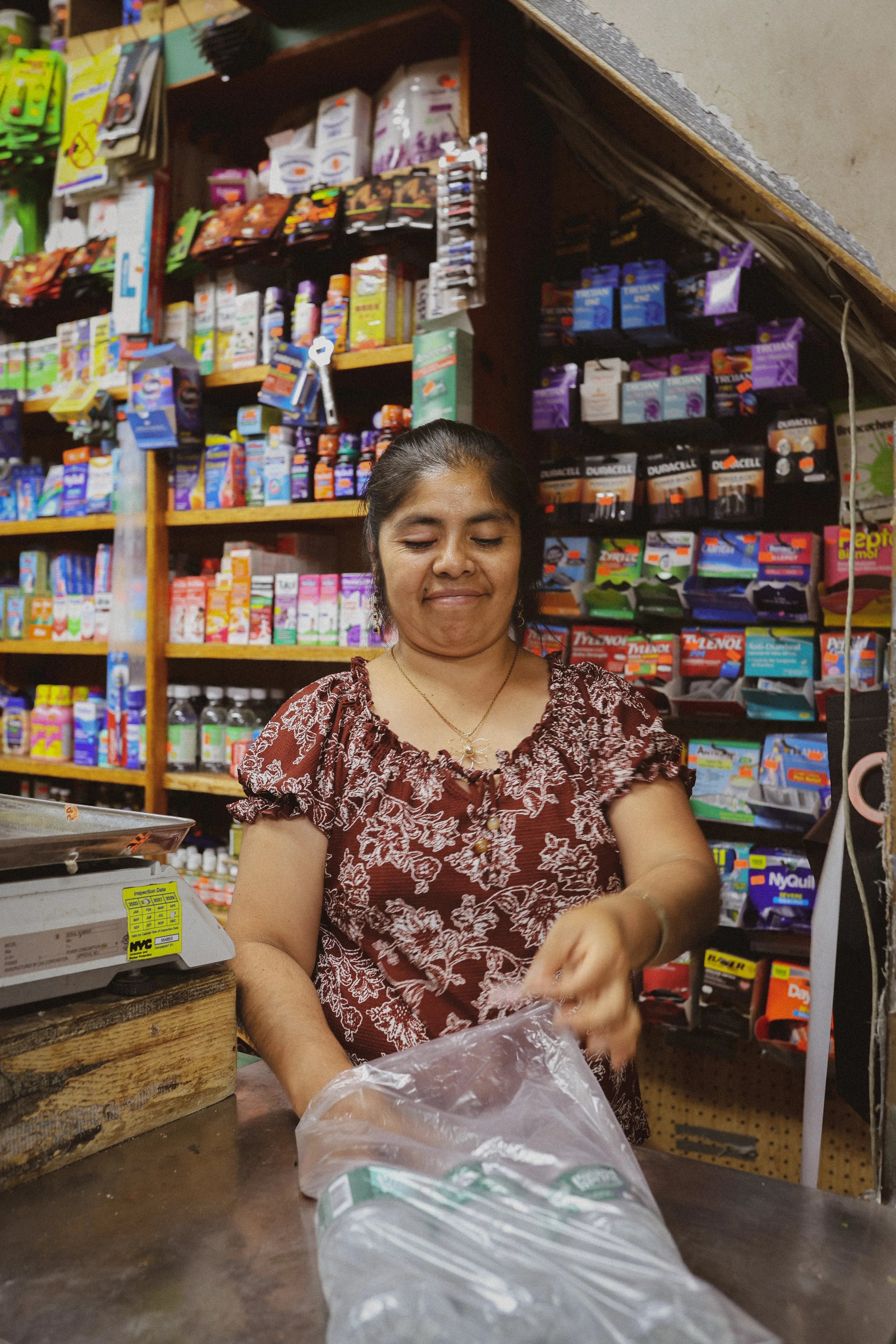
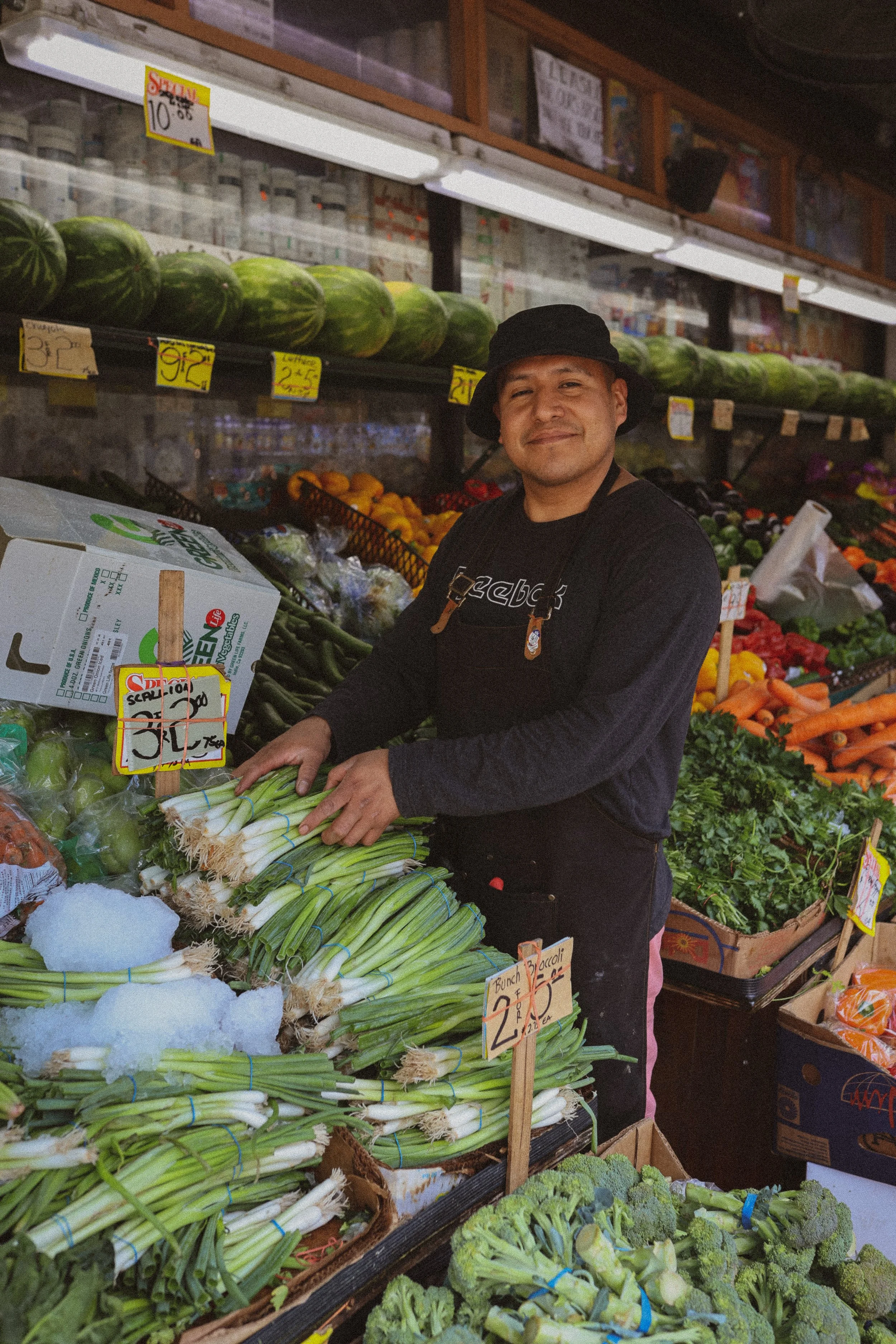
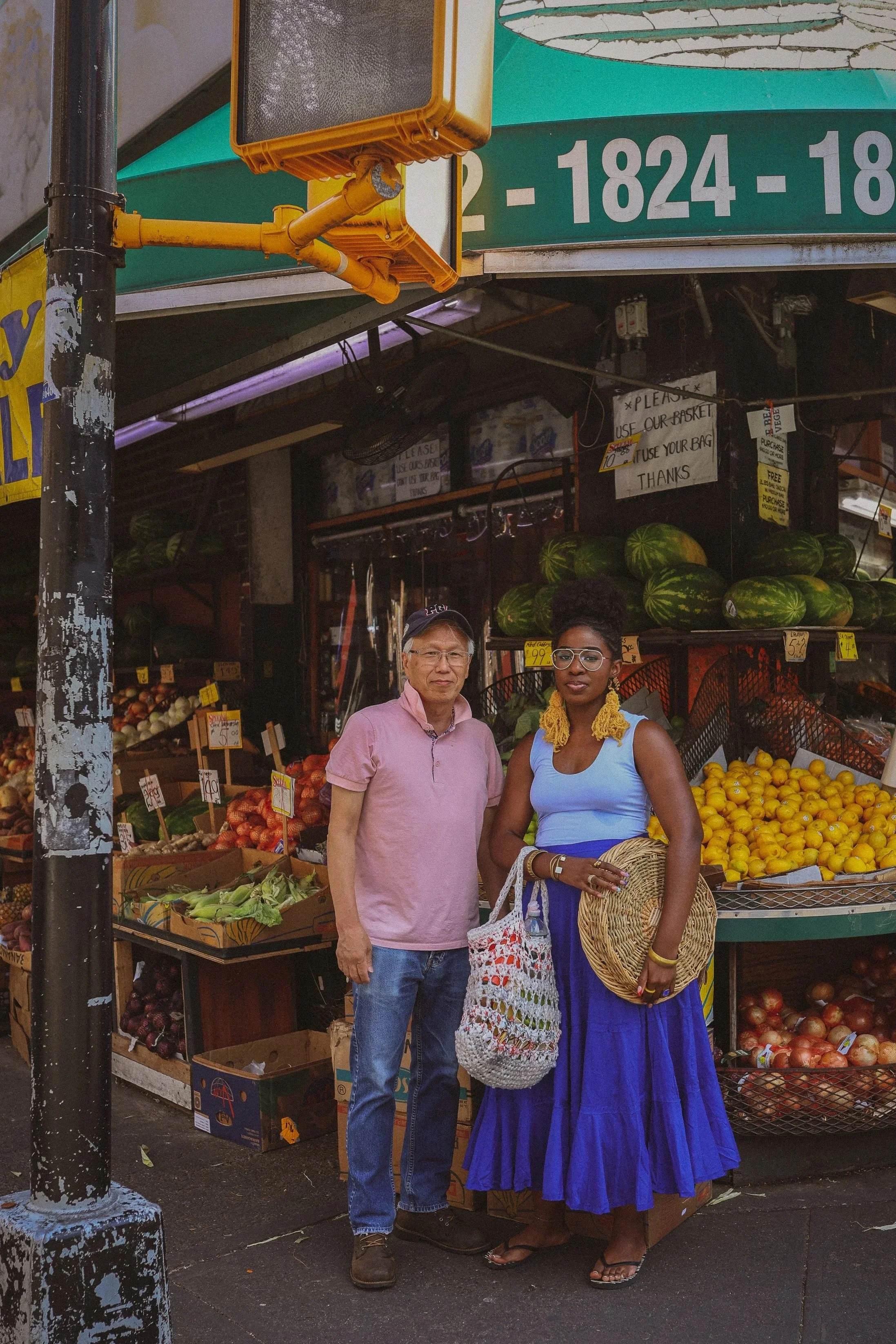
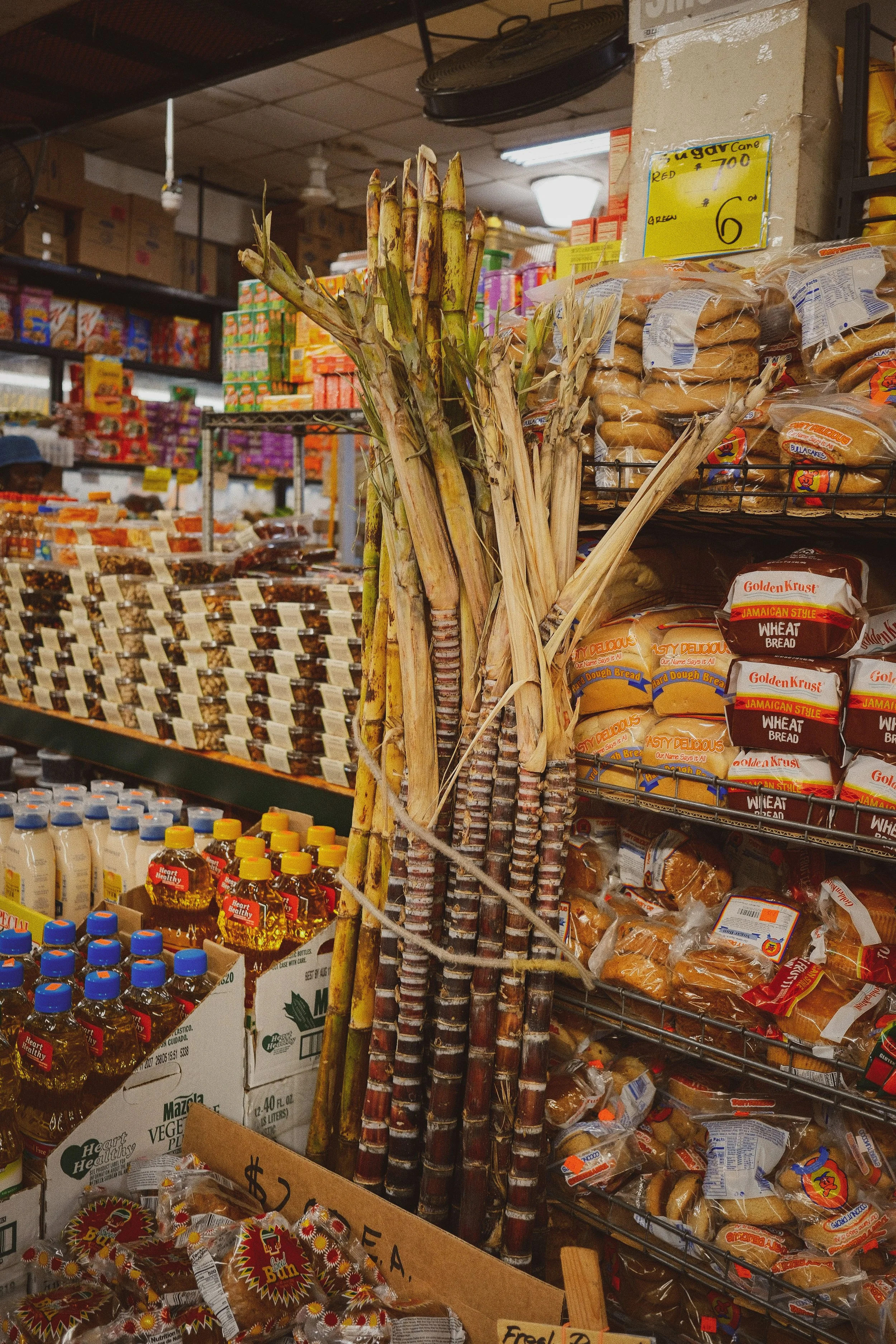
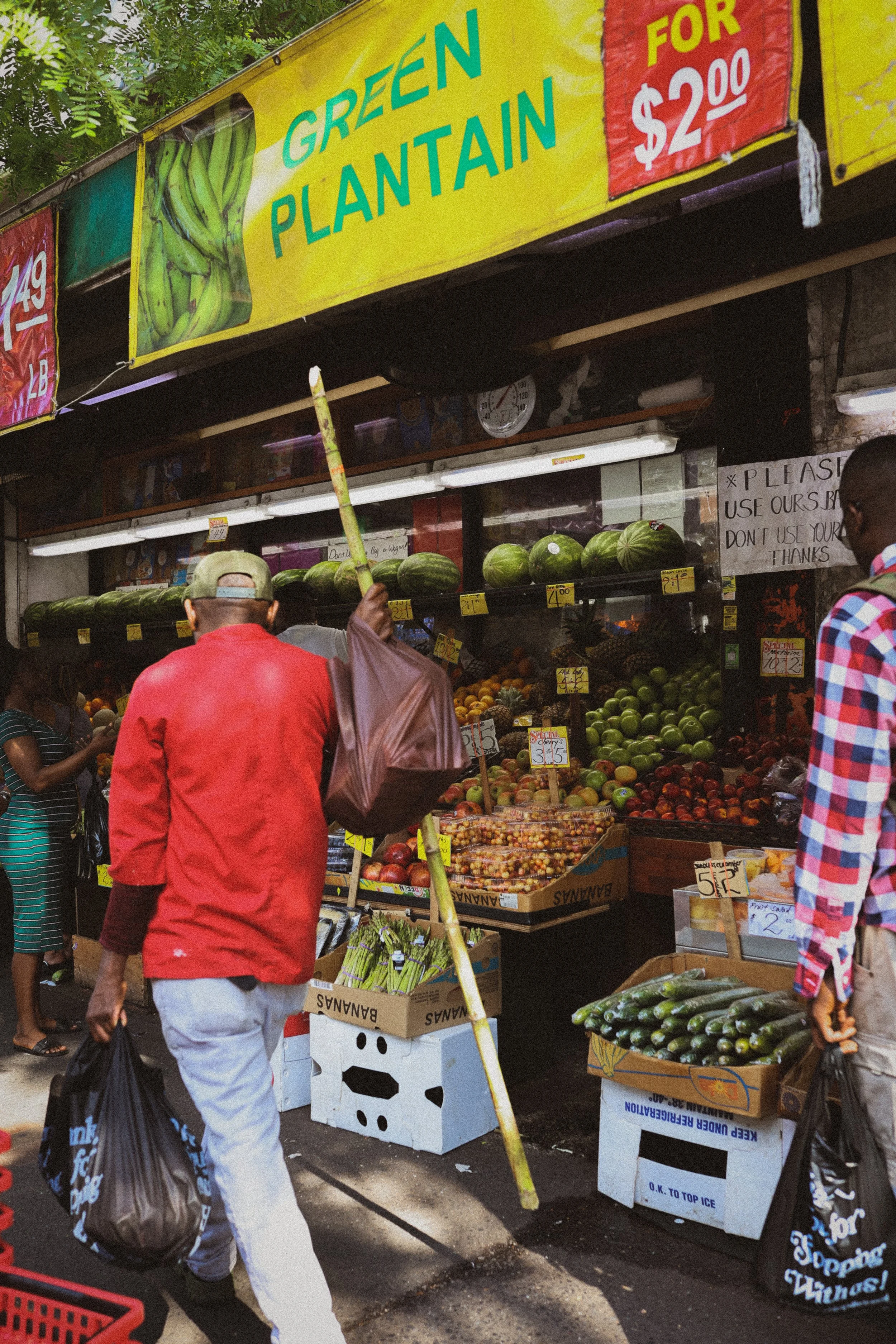
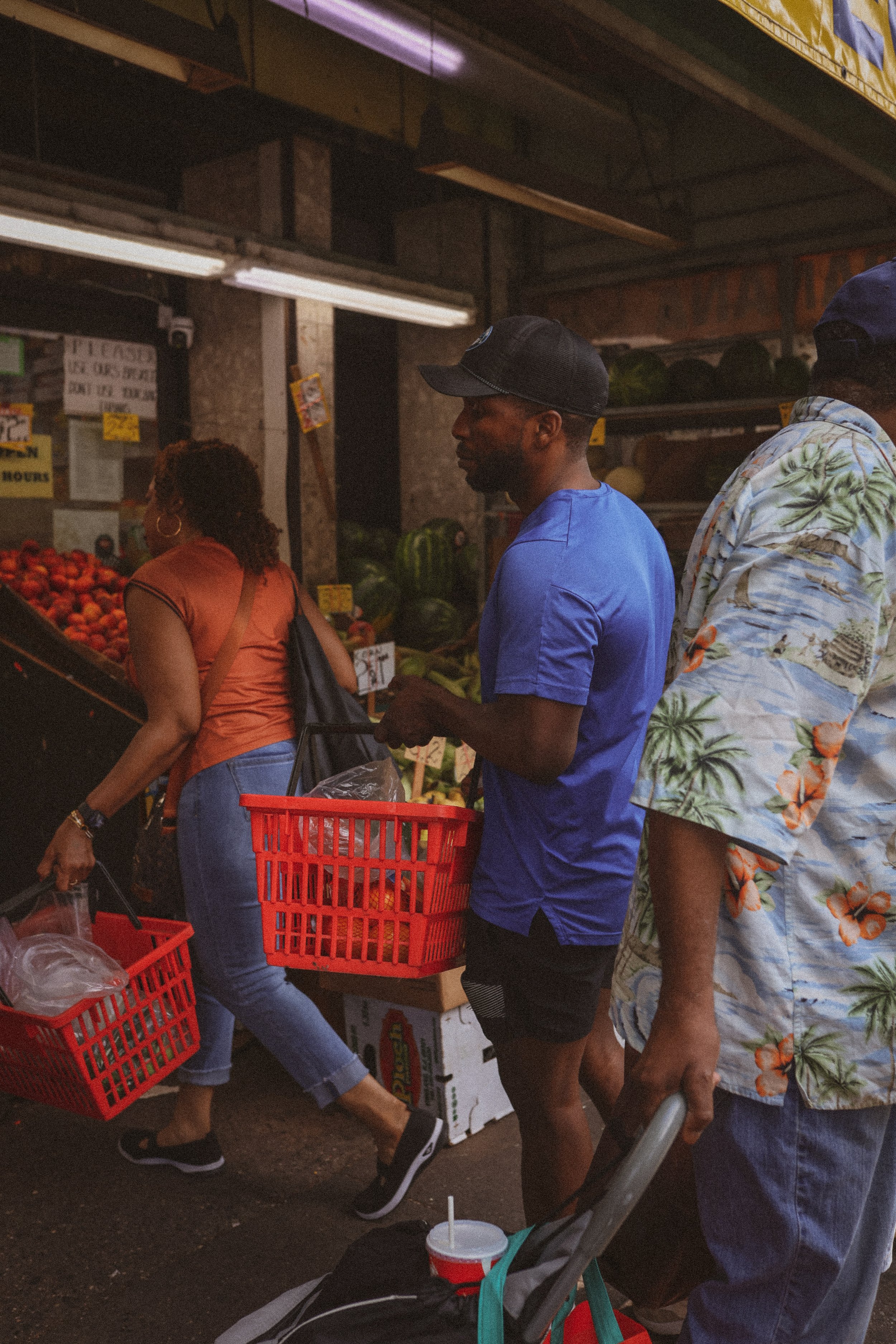
Against the backdrop of Church Fruit Farm, a produce market in the bustling Caribbean neighborhood of Flatbush, Brooklyn, Paul returns to a place that was both a generational fixture within her family's routines, and where memory, labor, and culture continue to circulate. Surrounded by familiar textures, colors, and rhythms, her work becomes less a departure from tradition than an extension of it.
As she embraces the visual language of her West Indian heritage, the market becomes part of the story itself—a living archive of the materials, traditions, and exchanges that continue to shape her practice—woven baskets, fresh produce, familiar exchanges, and everyday rituals—a natural setting for work that honors inherited craft while reimagining it through a contemporary lens.
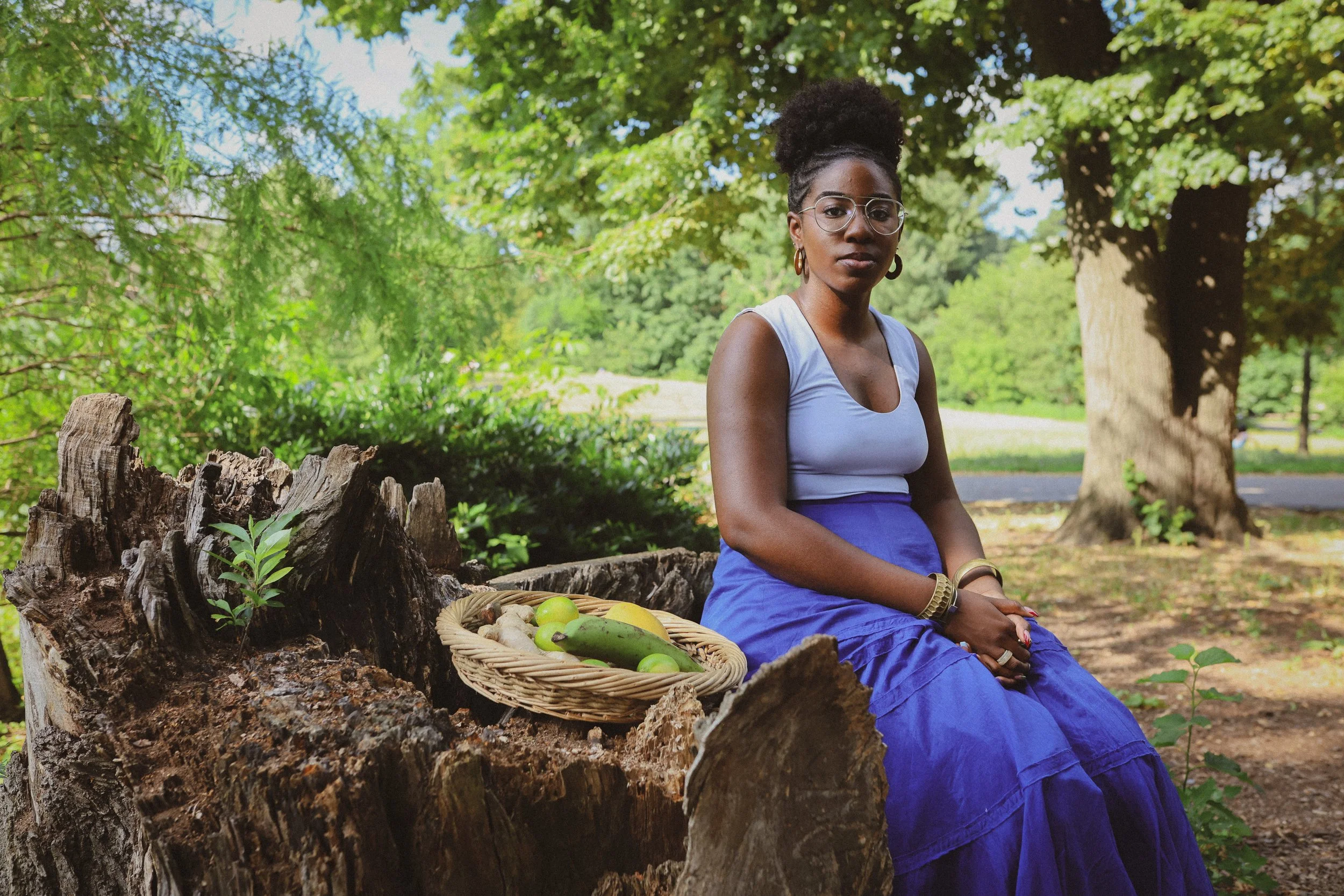
“Hi, My name is Rhesa Paul. I’m a Brooklyn-based visual artist and painter and my work is about generational craft, basketry, and familiar objects. I paint in a blue palette.”
What makes an ordinary object hold your attention long enough to enter your work—and what do you think that says about how we decide what is worth noticing more broadly?
“An ordinary object such as the basket holds my attention because it’s an object of generational craft. It allows me to explore material that’s familiar to the household in the Caribbean diaspora and how craft in care embodies individual care—in my home, and my family’s home across generations. It’s an object that holds, it’s precious, and it took labor and care to come to life. It lasts years, and it’s an object that speaks for itself. It’s a container and it holds memories.”
When something is used every day, what do you think happens to its perceived value over time, both in how we see it and how it is culturally understood?
“Familiar objects, I perceive as crucial to how we act and move around in our spaces. The basket is an object that spans centuries as an object for transportation; and now working with the basket and deconstructing it, I’m interested in how that carries on into my generation as craft and how I translate it through painting.”
Where do you locate the difference between usefulness and value in your own practice, and how do you think that distinction operates in everyday life more generally?
“The baskets that I source for my paintings are pre-loved. I see that as a useful aspect of the object because I’m giving them a second life—both translating them on canvas and as sculpture pieces. Usefulness and value go hand in hand. I believe that the objects that we place around us have significance when we give it to them. It describes who you are as an individual and how you see the space around you.”
What drew you to the woven basket as a form you keep returning to, and what does it allow you to explore in painting that other subjects don’t?
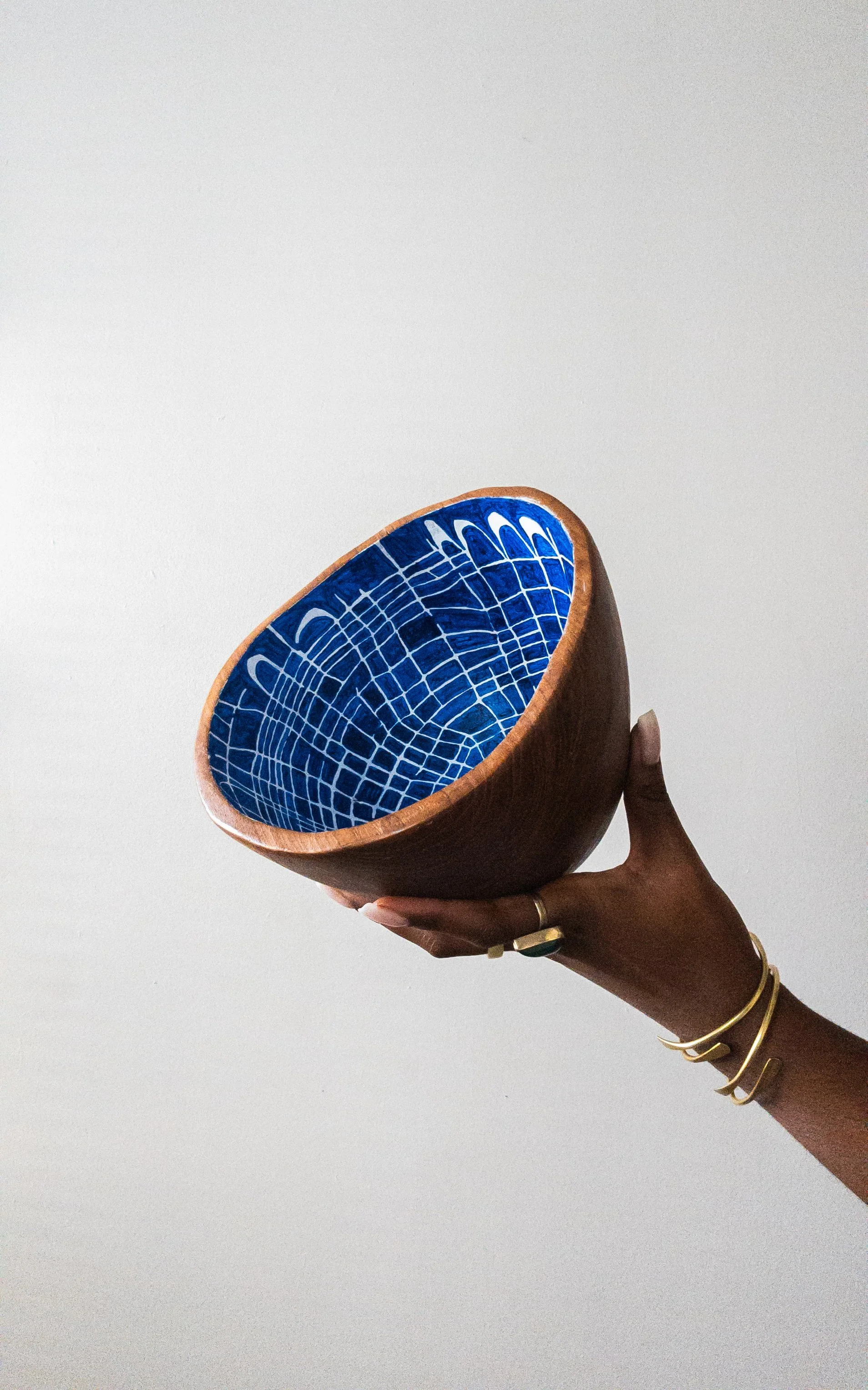
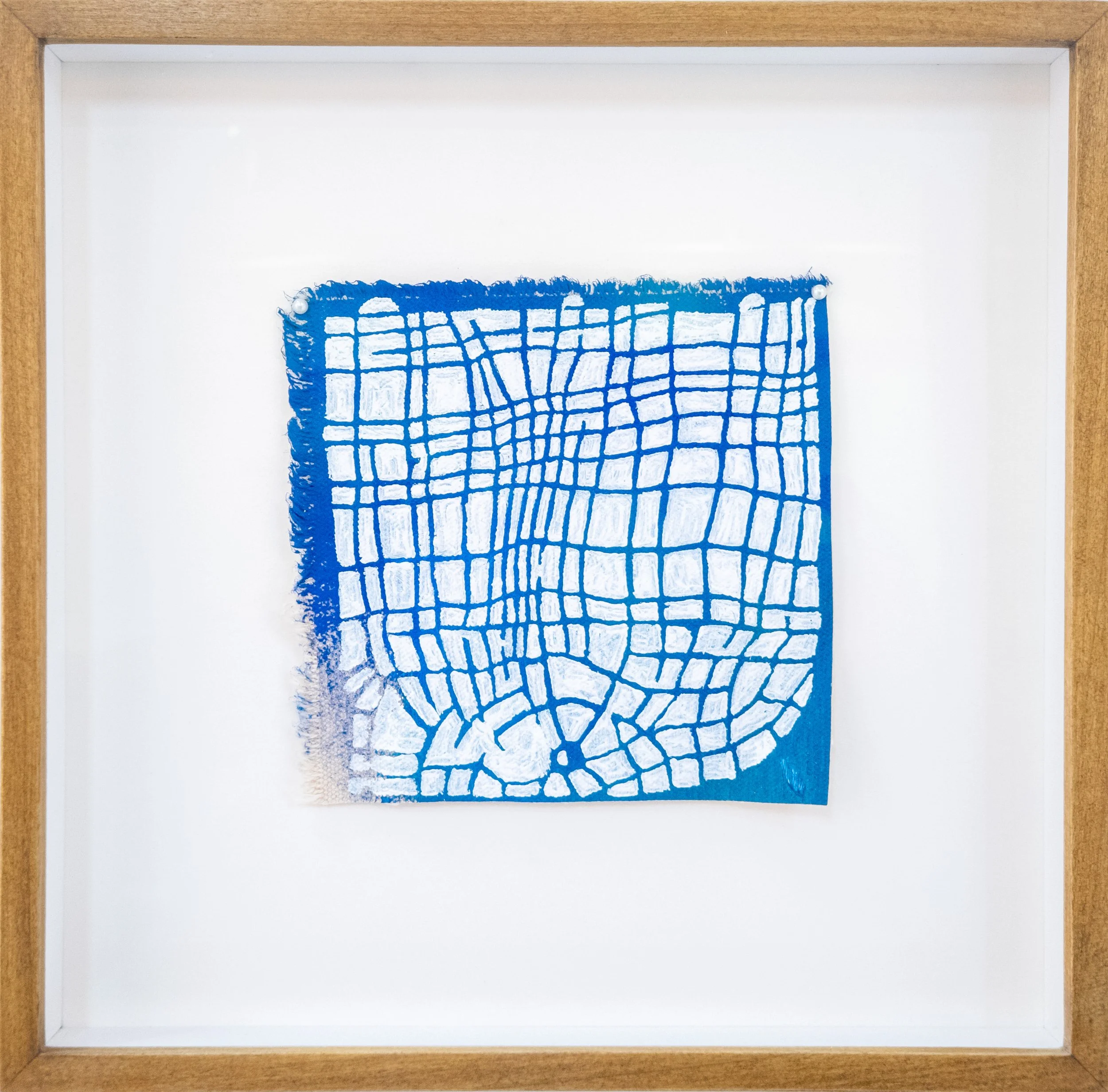
“Flipping through family albums drew me close to baskets. My grandfather on my father’s side had a basket-weaving company back on the island of Dominica. Diving into these family albums, I said that I’m going to “carry on” this family business through painting and in my own translation. Many people ask if I would ever make an actual basket—but I work with the material loosely to do collage pieces or collagraphs—etching on the paper with the basket underneath so the pattern shows up on paper.”
When you spend time painting an object like the basket, what do you think you are translating—form, history, function, or something that sits between those categories?
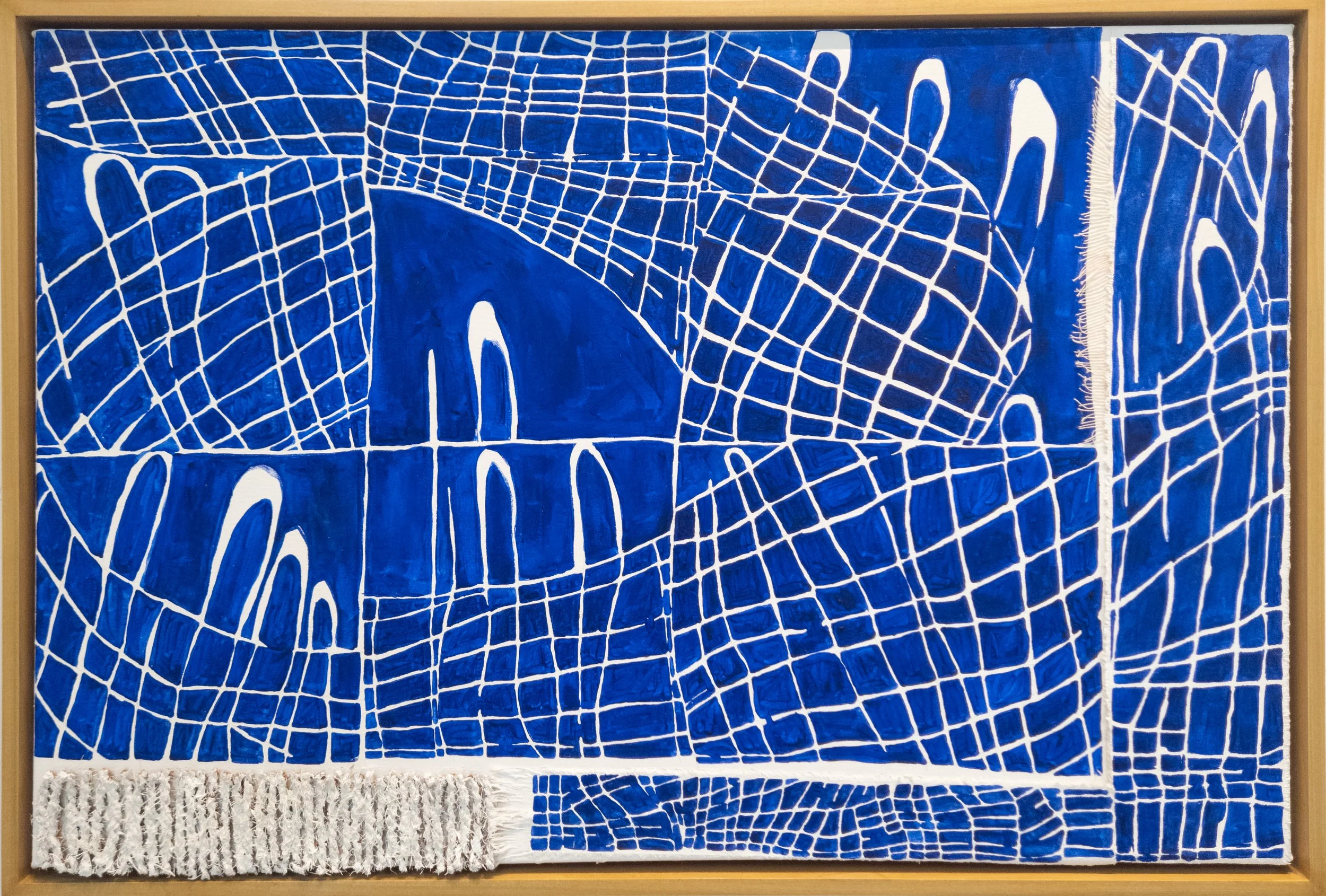
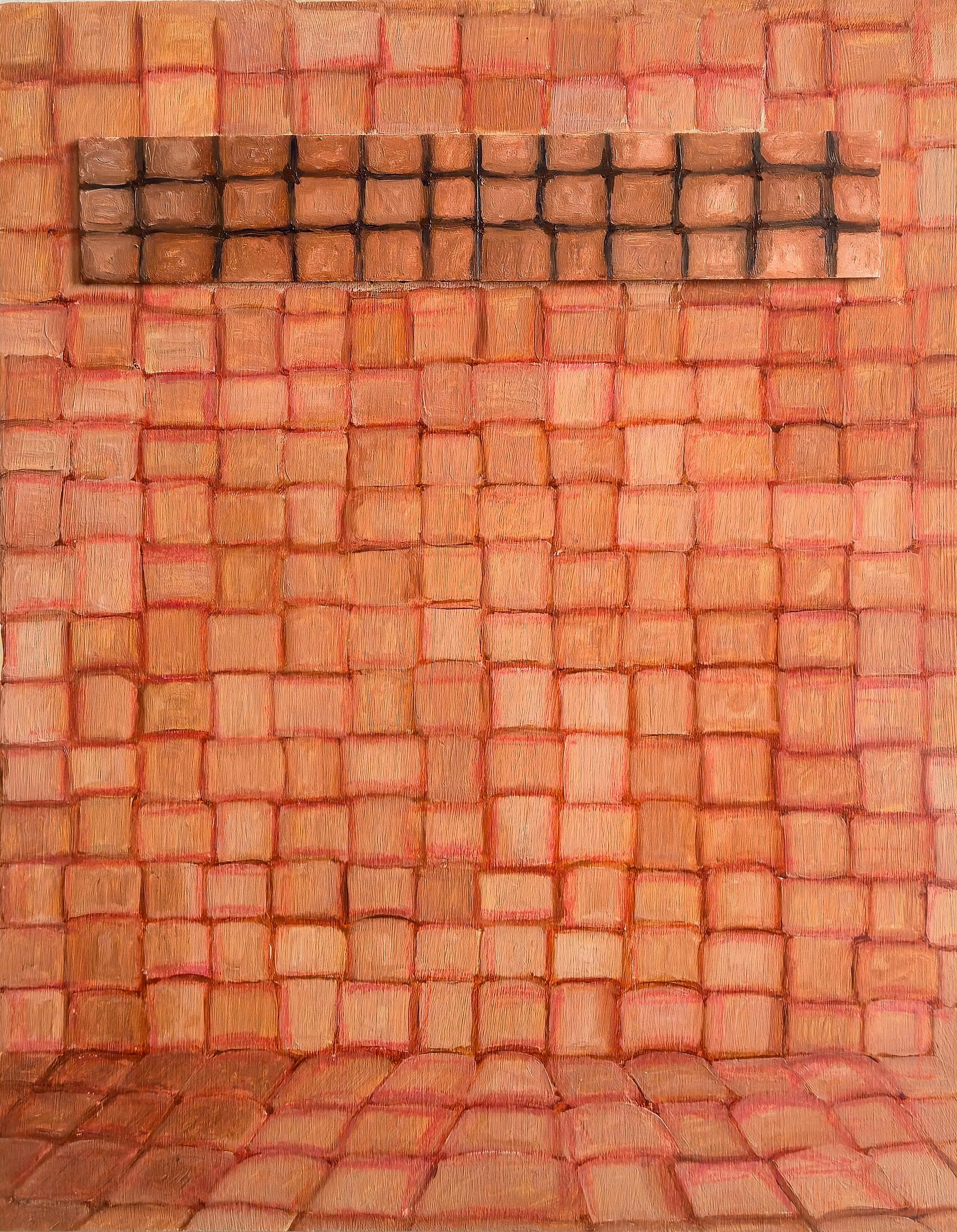
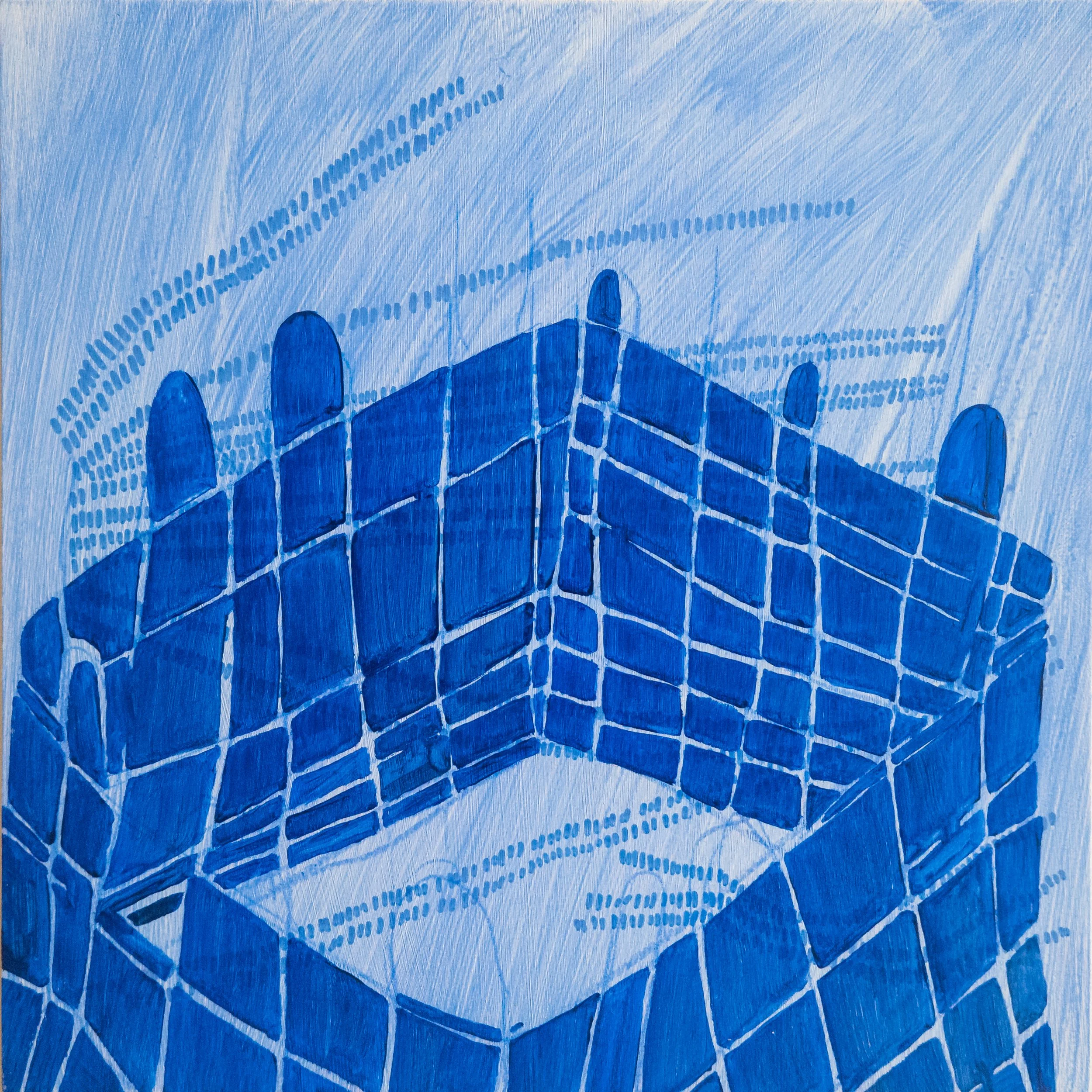
“When painting, I’m interested in translating time and the repetition process because basket weaving is a very meticulous craft and it takes hours for one simple basket to be crafted. For me, with oil painting or drawing, I’m giving myself double work because there’s more detail to be captured when making the basket image. In my grid paintings—it’s more focusing on geometry, polygons and squares, and focusing on a single color to make the design of the grids pop out more.”
What does the woven basket reveal to you about how cultural significance and economic value can sit in tension—especially when something is essential, widely used, and yet often undervalued monetarily?
“The reason I collect my materials pre-loved and secondhand is because I’m a really strong believer in supporting small local businesses and artisans—people who make things that are familiar to you. The tension lies in the area of consumerism. We buy a lot of things for our spaces and being able to source the things that we love secondhand adds character, it adds more charm, and it extends the life of things that you put in your space.”
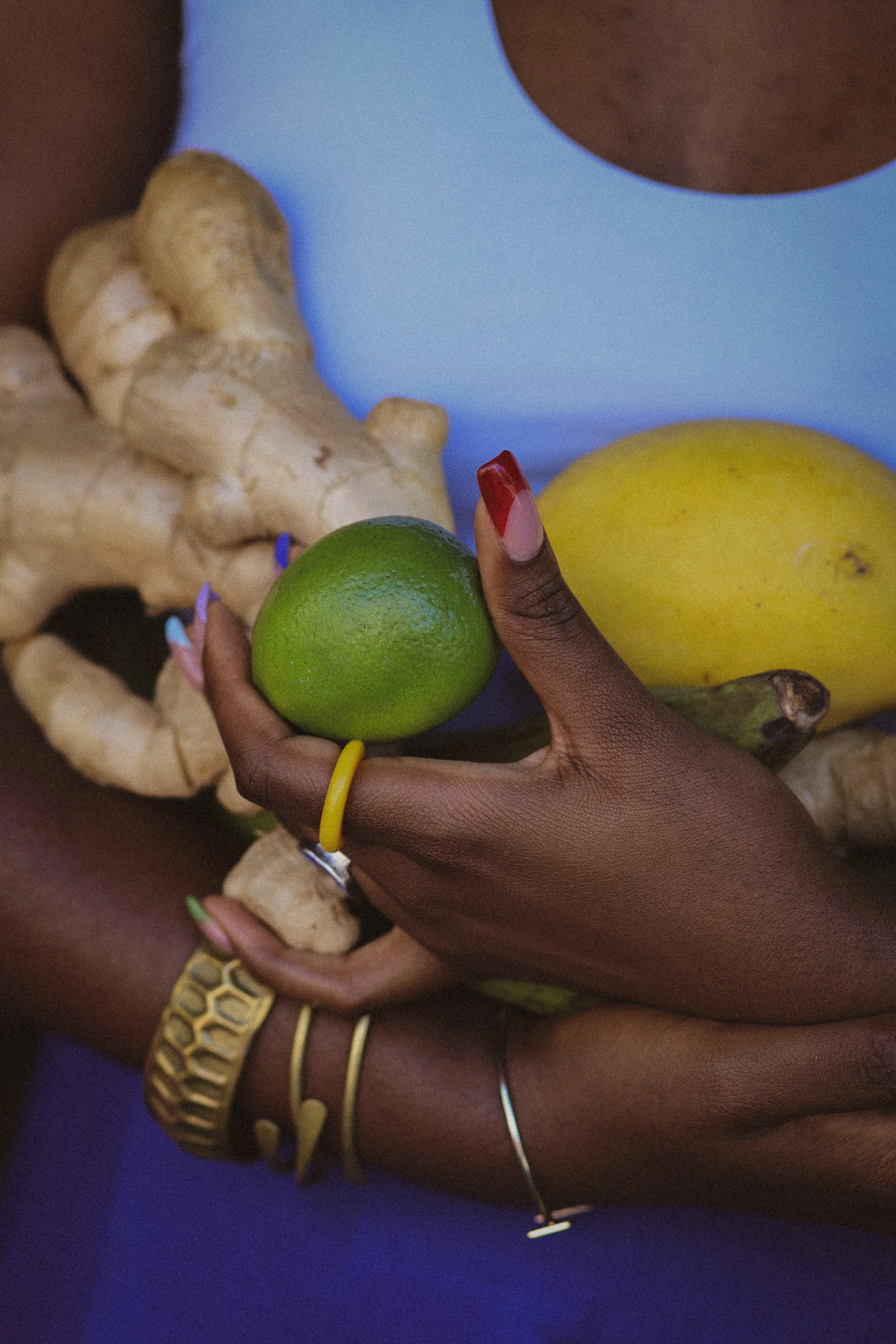
Does the meaning of an object shift for you depending on where it exists—say in a domestic space versus a public or commercial environment—and how does that awareness enter your work, if at all?
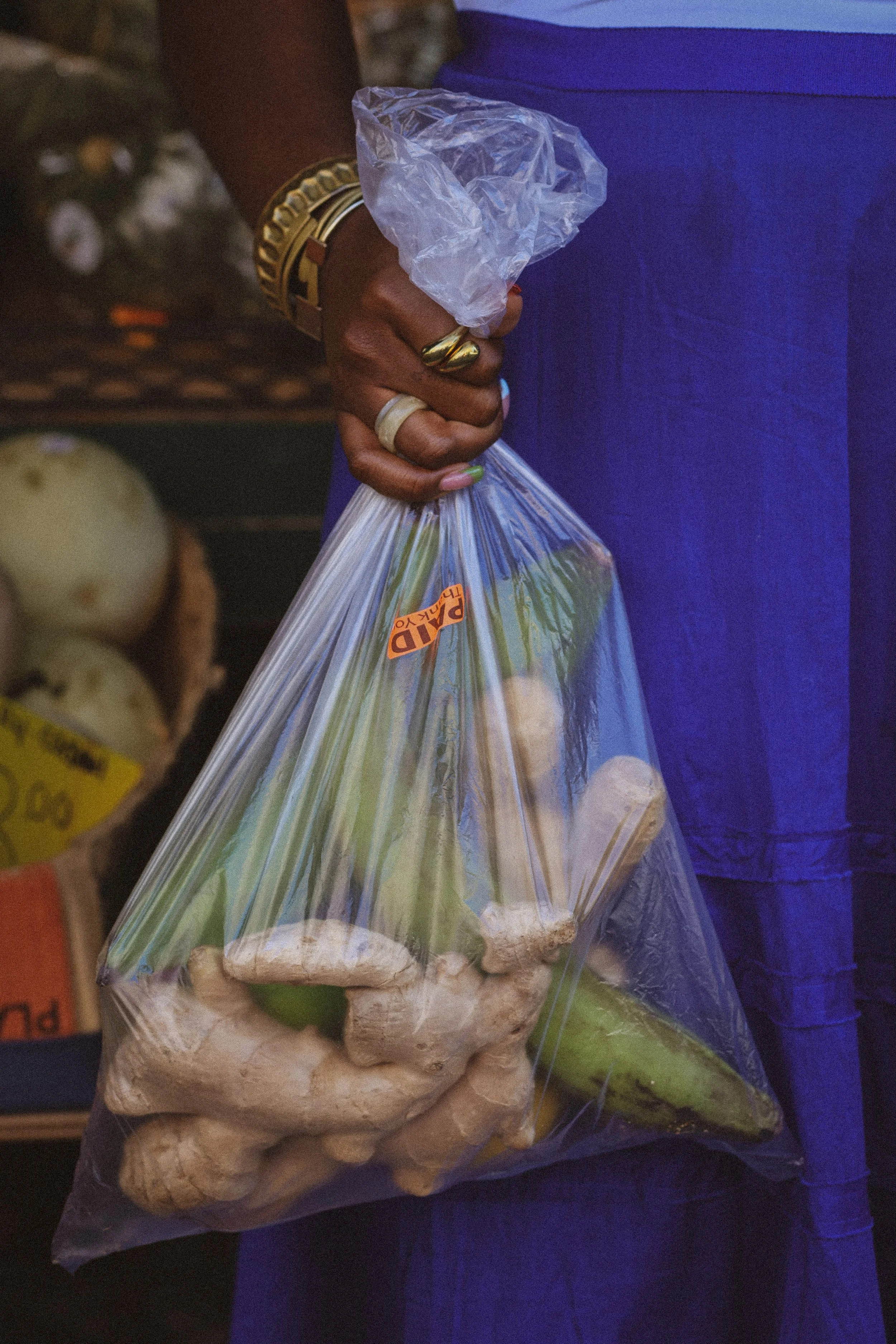
“I’ve known most of the baskets to be in homes but when I do see them in public spaces—it reminds me of home. It reminds me that there was someone behind the scenes to make it. They’re handmade and there was someone that took a few hours to produce the object and that in and of itself is really beautiful.”
What kinds of histories or inherited ways of making and living do you feel present in the objects you choose to paint, even when they are not explicitly referenced?
“A common theme that I’m working with is horizon lines. Baskets are known for transportation and traveling across borders. That history is very relatable, especially in today’s times, and especially in the processes and histories of migration. Horizon lines as we see them are parallel to our eyesight. In my work with the basket, and dissecting them, it acts as a map in a sense. The basket in itself is a history that relates across cultures and I admire the craft and the generational hand that it takes to transport baskets, memories, and histories all the same.”
How do ideas of care emerge for you through objects that are handmade, repeatedly used, and circulated over time?
“Care, in my process, is something I really take pride in doing. I know I give myself double work dissecting these baskets into grid paintings, but one of themes I also focus on is the moments of being at ease. My grid paintings are very repetitive, but there is a relaxation aspect to it. It’s very meditative—it unwinds your hands and your mind—even though it takes a few hours to create. Ease is an idea that I really track with, and some of my works are titled ‘with ease’ or ‘easement’.”
What do you think remains of the labor that made an object like this once it moves into circulation and everyday use? Do you think objects carry memory or trace the presence of the people and environments they pass through—and how does that idea shape your approach in the studio?
“I like to think of it like a scent—sometimes when we smell a familiar scent, it reminds us of a time. Baskets and other interior objects hold the same presence. It could depend on whether your grandmother gave you something to have in your home or your aunt or uncle passed it down from their home, or back in the Caribbean when barrels come up, when you unpack them here, they really carry that weight that was living in their space.”
In your process, how do you decide what details to emphasize and what to leave unresolved, especially when working with objects that are already familiar or overlooked?
“I like to emphasize the color blue—ultramarine blue. It’s a blue that is very sought after in raw pigment. I like to focus on depicting the objects in my interior paintings. When the process gets a bit repetitive, I switch mediums, I do printmaking—linocut is my favorite to really lay on the pattern work.”
How does your work engage with the concept of sustained presence?
“[Baskets] carry out in my work by remaining an object of importance. Even when people move and travel elsewhere, the basket remains in its function. It holds a very important part of history—my own history, Caribbean history, and other histories as well. It spans across cultures and that cross-cultural aspect of basketry and containers as a whole, brings us together globally.”
What are you still learning from returning to the same kinds of objects over time, and what do you want people to reconsider when spending time with your work?
“I’m still learning that you are what you make of your environment. I’m a lover of curating your personal space—it shows who you are without speaking. It’s a testament to who I am as a visual artist. Curating my space is something that I take pride in and enjoy doing. It has the power to speak volumes without you being in the room. I’m always cycling things out of my space whether it be plants or vases or placeholders. There’s a freedom and meditation to it—everyone should take pride in surrounding themselves with what they love and objects that hold memories for them. I want people to spend time with my work and remember that they can observe slowly—be at ease. Many people say that whenever they see my work, they are calm. The color blue exudes calmness. They can slow down when they see my work and know that they are welcome. Extending the generational craft is where value comes into play. It’s a testament to make work that is familiar to a certain group of people—and even West Indian culture spans across waters. My audience is broad and I admire the value cross-culturally.”
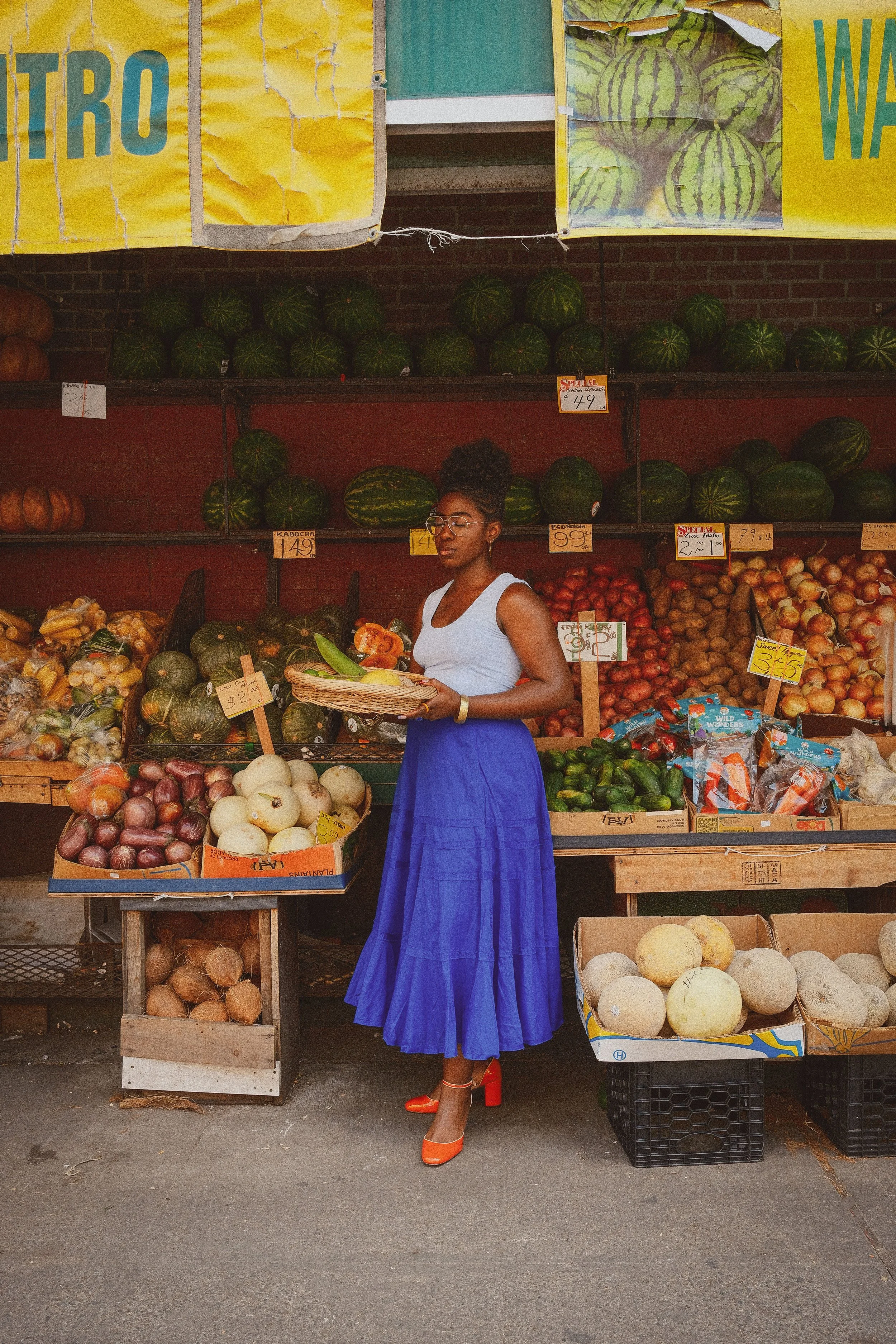
Photography by Ashley Munro
Interview featuring Rhesa Paul & Editorial by MUNREAUX
Artwork by Rhesa Paul