BREAD OF PEACE: rituals of nourishment and brotherhood.
The following project arrives in the photographer's own words. This presentation invites readers to move between image and testimony, allowing the rhythms of preparation, travel, and reconciliation to unfold as they were experienced. Together, the photographs and accompanying text document a tradition sustained through ceremony, ritual, labor, exchanges, and acts of participation that make gathering possible.
ﺧﺒﺰٌ ﻣﻦ اﻟﺴﻼم - Bread of Peace
by Mohamed Gamal
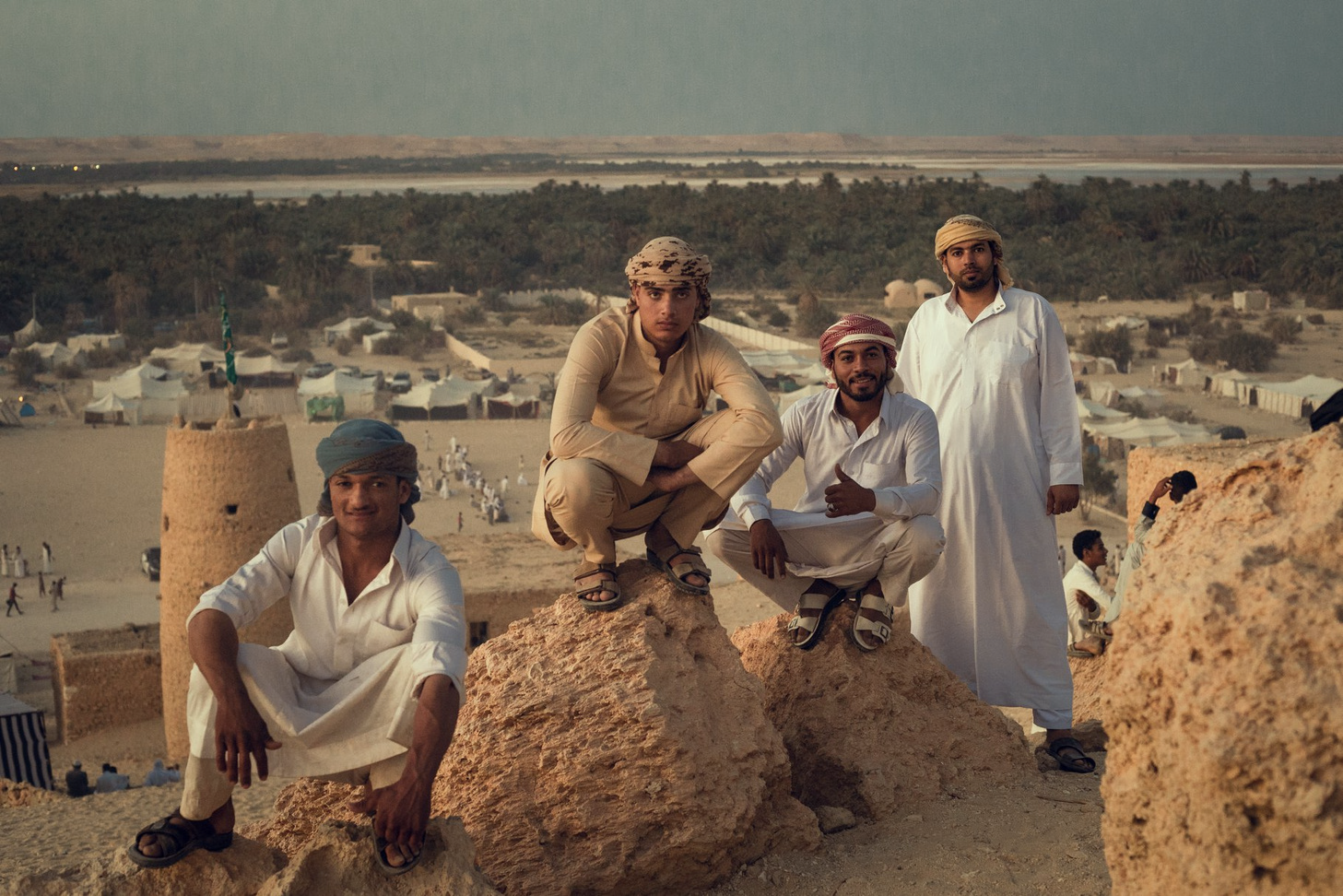
On the rocks of Mount Dakrour, four young men from Siwa sit with the oasis, tents, and salt lake behind them. Here, atop this mountain that has witnessed hundreds of years of conflict and reconciliation, the Reconciliation Festival begins every year under the full moon in October.
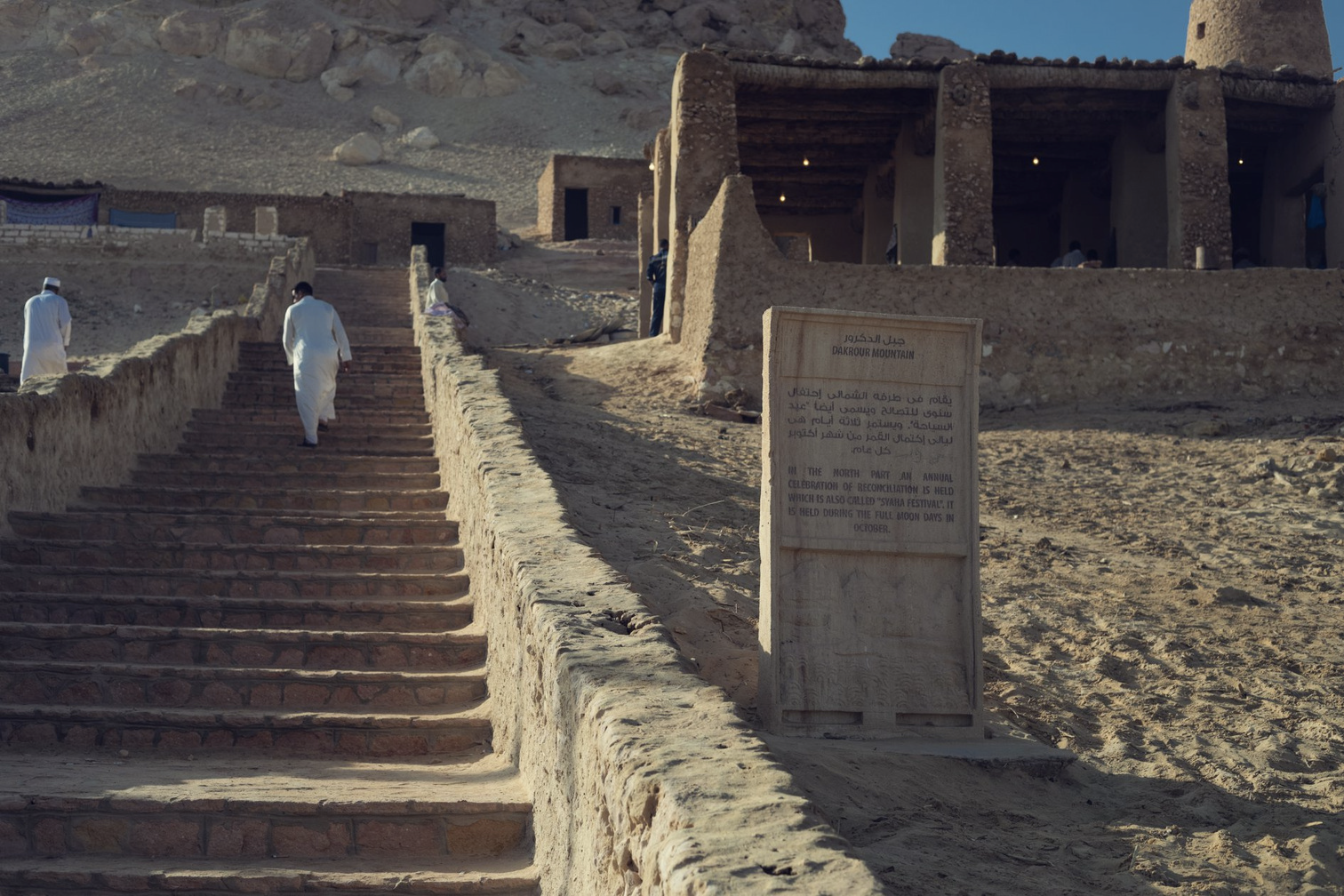
An inscribed stone at the foot of the steps proclaims in Arabic and English: "An annual celebration of reconciliation, held on the full moon nights of October." The stone is silent, but its words carry the weight of a centuries-old tradition.
From the perspective of the Bread of Peace project, food is more than just a means of gathering or eating; it is a social language that reflects the concept of reconciliation and harmony among people.
Throughout history, the shared table has been a space for resolving differences and rebuilding relationships, where everyone gathers around the same food without distinction.
Here, food becomes a symbol of equality and belonging, and an indirect tool for peacemaking among individuals, which makes documenting this culture a fundamental goal for understanding how simple customs can carry profound human meanings.
The project explores how a basic resource—bread and food—becomes a repository of collective values, community identity, and reconciliation. The meal itself is the medium through which peace, belonging, and tradition are expressed.
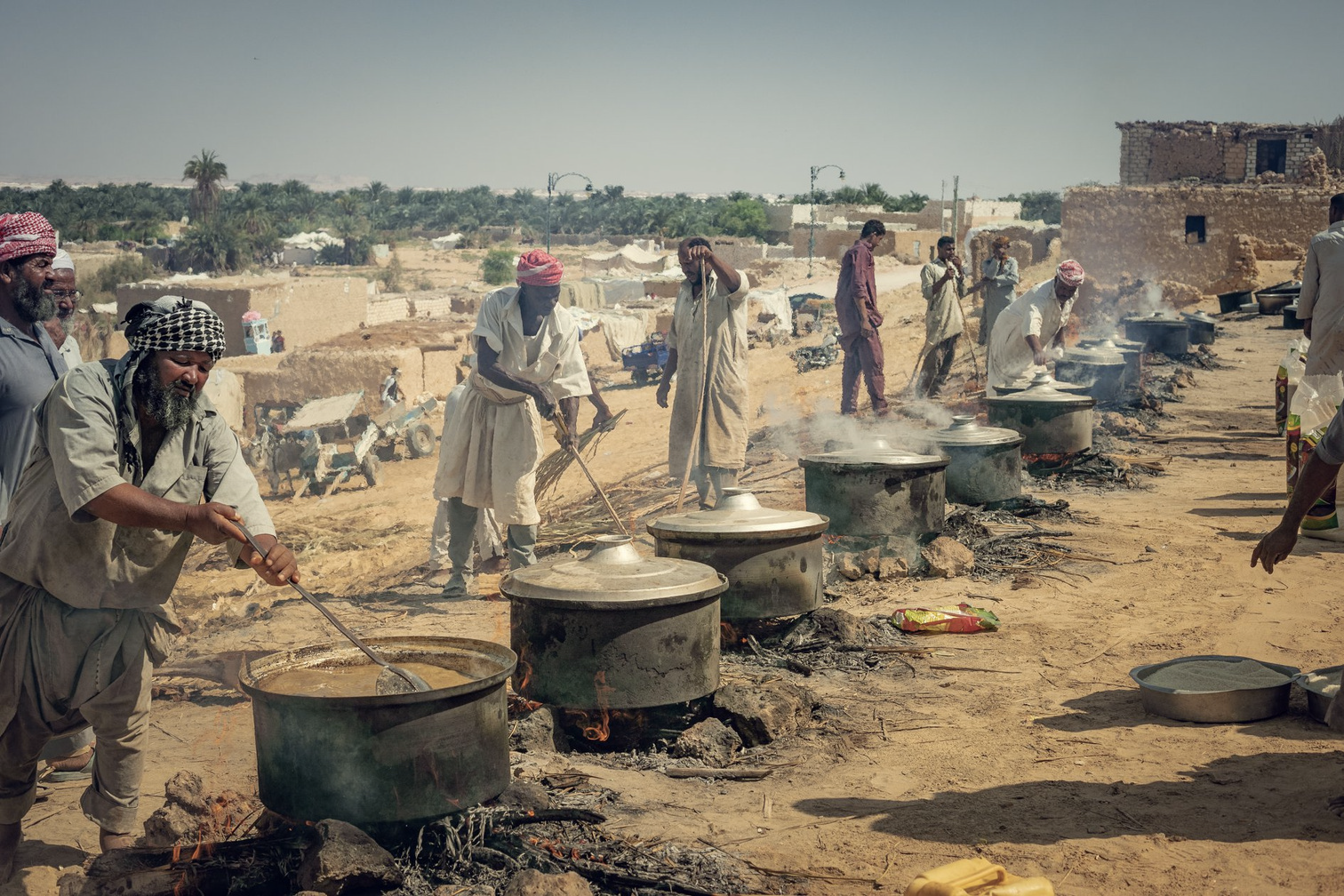
Before anyone sits down to make peace, everyone must eat. Men stir giant cauldrons over open fires in the heat, as smoke rises toward the clear skies of Siwa. Here, food is not merely a meal; it is an acknowledgment that no enmity exists between us—that you eat from my food, and I eat from yours.
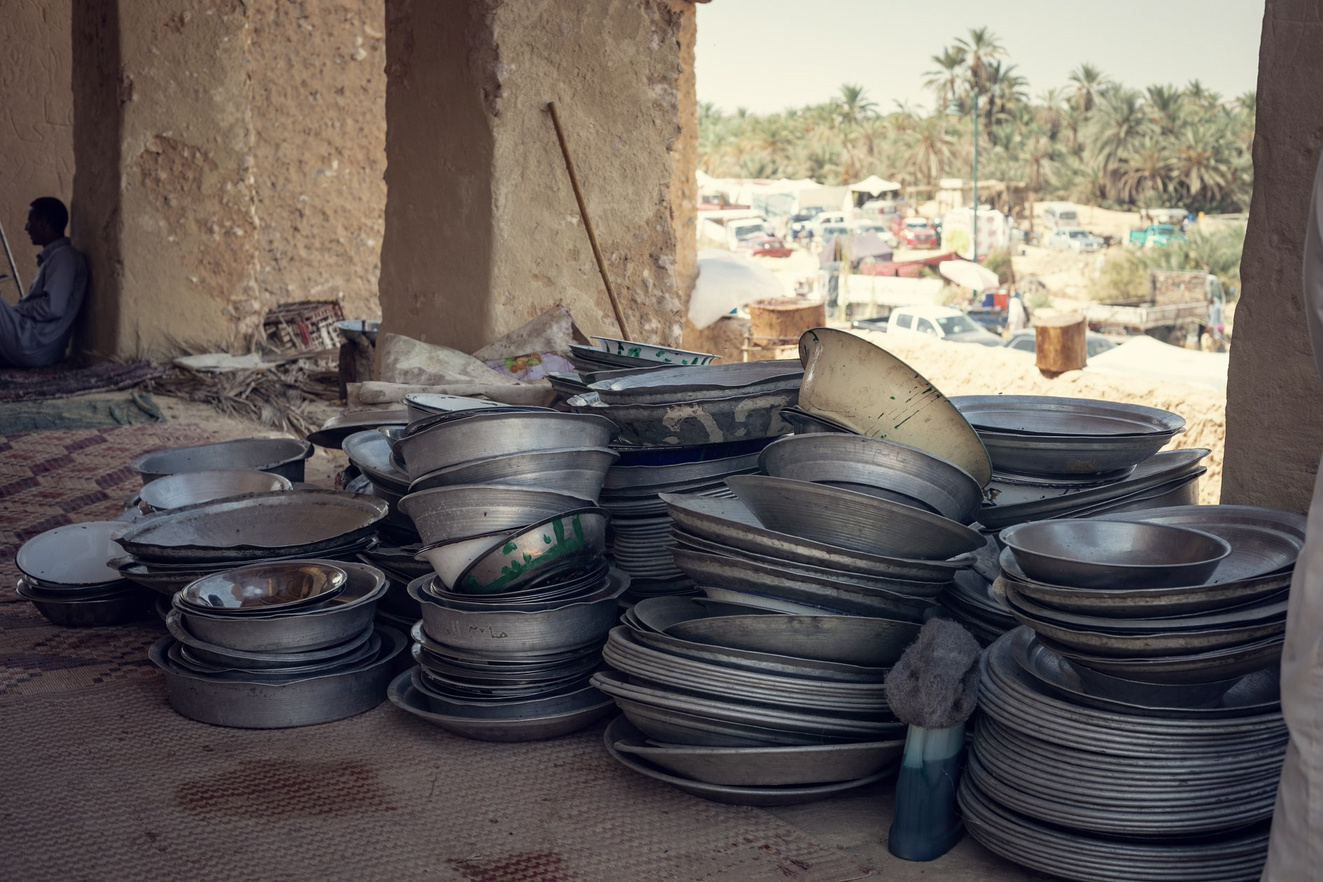
A small mountain of metal trays piled high in the shadow of an old building, behind which lay the oasis and the tents. These trays, now empty and silent, would bear the feast of reconciliation, but in a few hours they would be carried on the heads of hundreds of men.
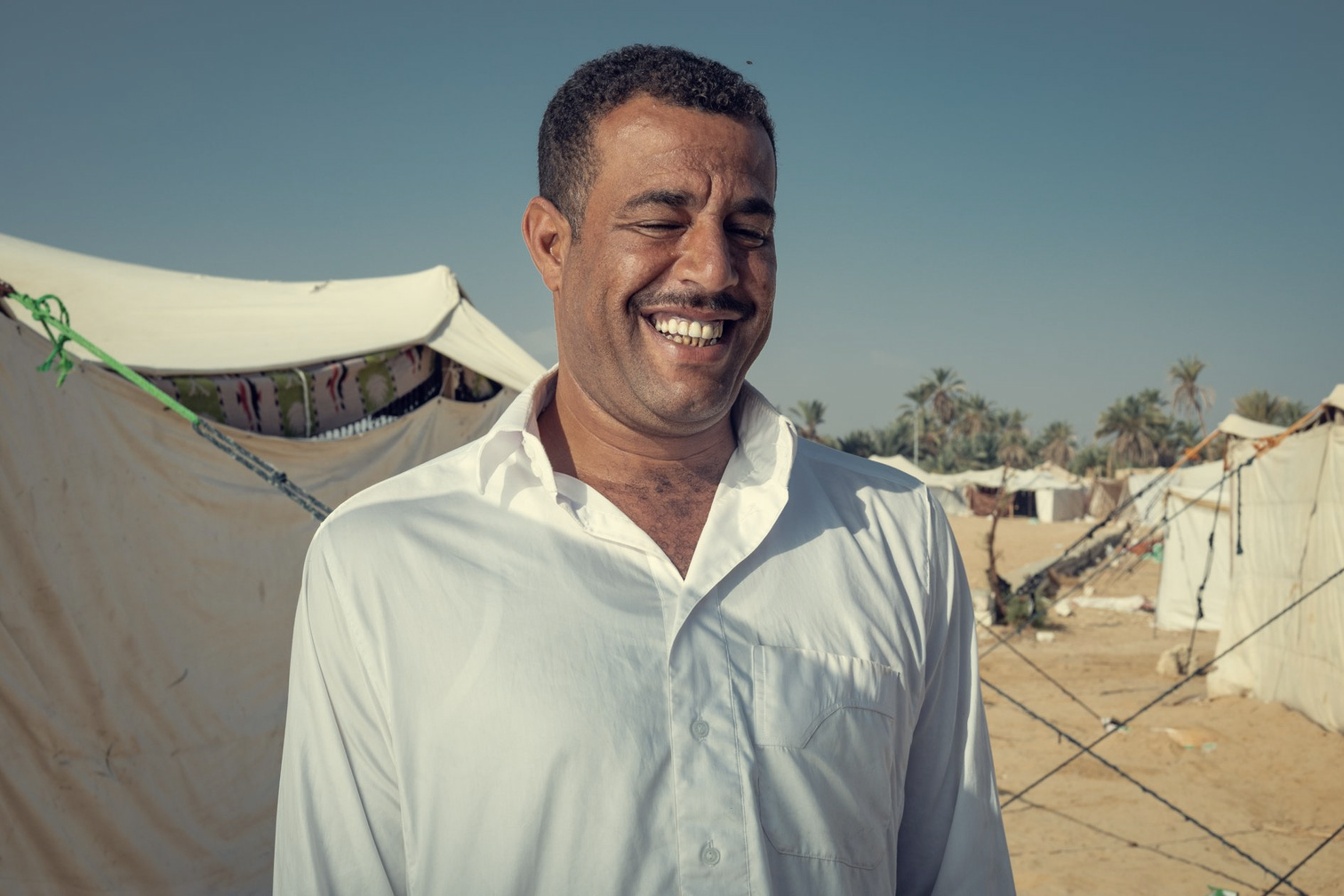
A broad smile, a white shirt, and behind him, the tent city that sprang up in the desert for the days of celebration. This face says everything about the spirit of Reconciliation Day: not a formal, charged occasion, but a genuine joy in meeting people.
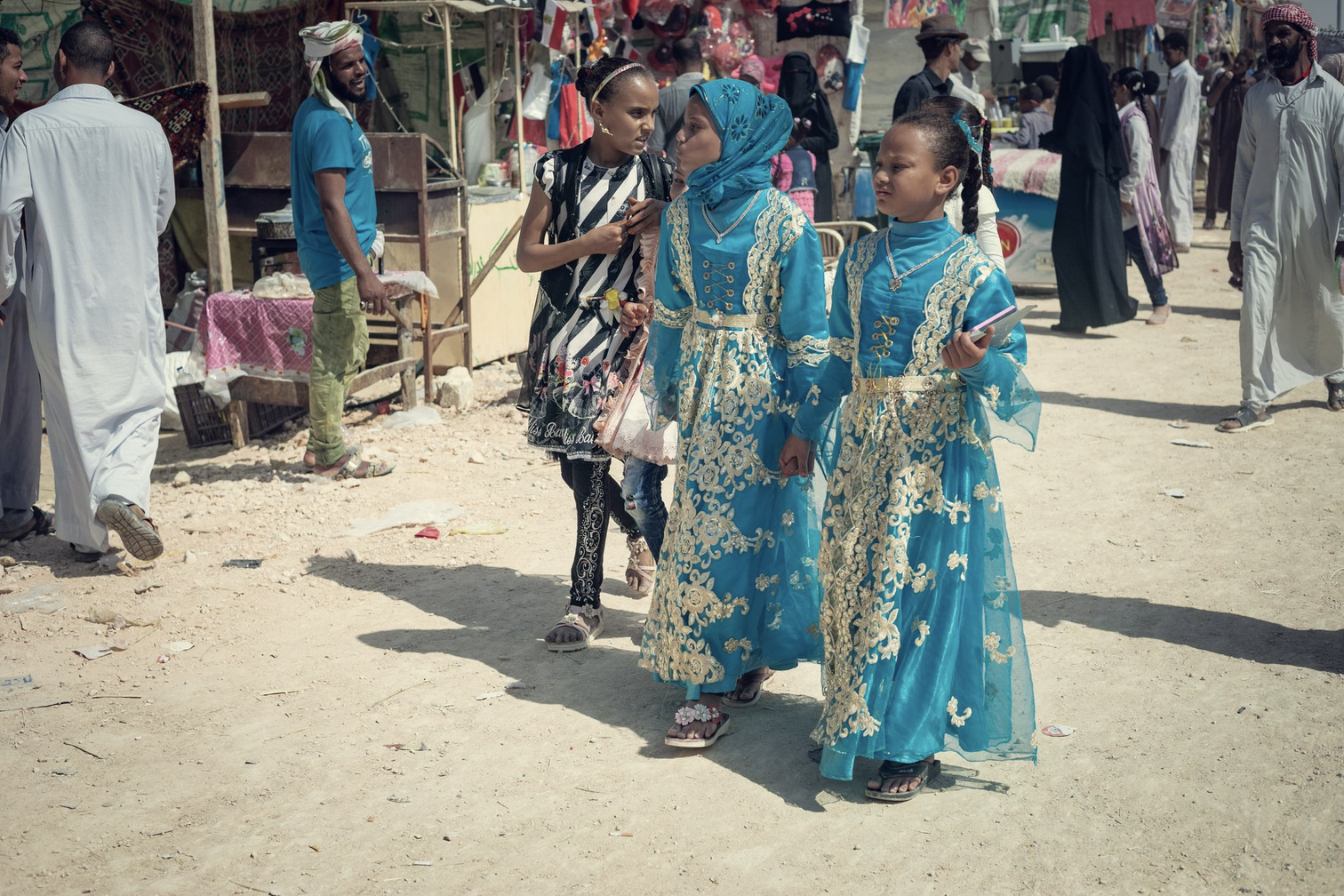
In the Celebration Market, two girls walk by in turquoise dresses embroidered with gold—the traditional attire for young girls, and the most beautiful of Eid garments. The Festival of Reconciliation belongs neither to men alone, nor to the sheikhs exclusively; rather, it is a day on which all of Siwa adorns itself.
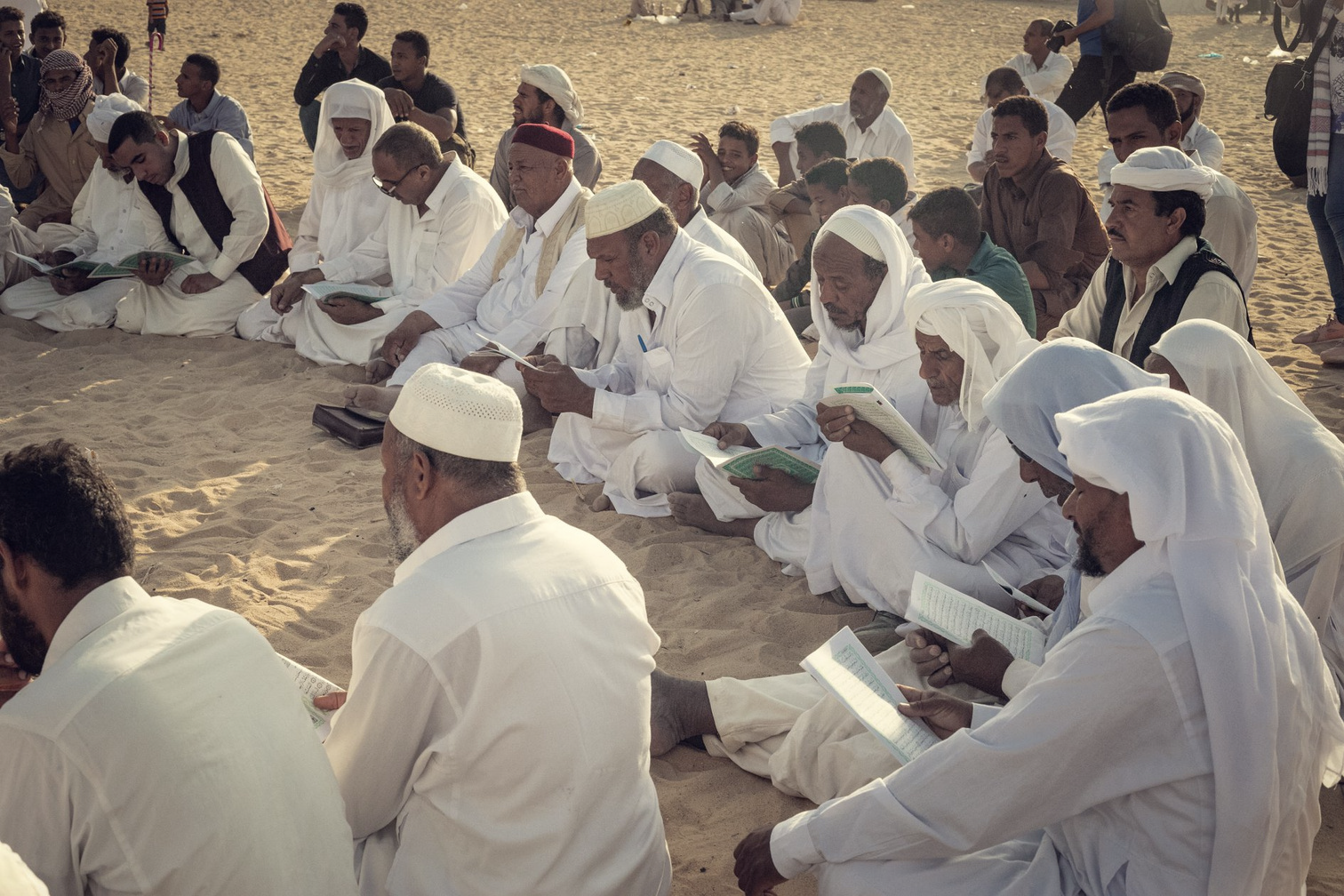
A circle of men sits on sun-warmed sand, reciting verses from the Quran and praises of the Prophet. Before settling disputes, those present purify themselves through remembrance, declaring that true reconciliation begins from within.
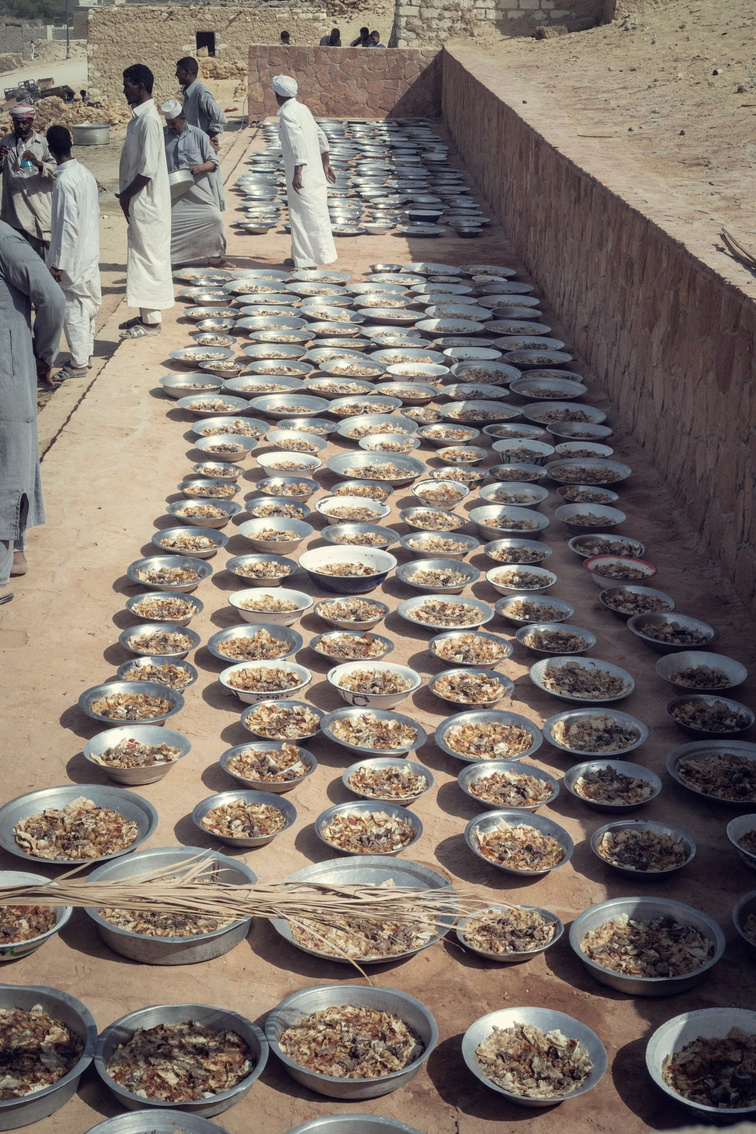
Hundreds of packed plates are spread out on the sandy ground. This iconic shot sums up the whole meaning: no one will return hungry, and no one will return as an enemy.
The Festival of Reconciliation is held annually in the Siwa Oasis during October, coinciding with the date and olive harvest season—the primary source of livelihood for the oasis's inhabitants. The festivities span three days, specifically taking place during the moonlit nights; during this time, Mount Dakrour transforms into the epicenter of the event, as residents leave their homes to camp there for the entire duration of the festival. The origins of this celebration date back to the year 1285 AH—more than 160 years ago—when Sheikh Zafir al-Madani successfully brought an end to a long and bloody conflict between the inhabitants of Siwa, specifically the "Easterners" and the "Westerners." Since that historic moment, this act of reconciliation has evolved into an annual tradition, revived each year to preserve the spirit of unity and to cast aside differences among the people of the oasis.
The rituals commence approximately two weeks prior to the festival, during which "dry bread" is collected from every household in Siwa by representatives of the Madani-Shadhiliyya Sufi Order—a scene that beautifully reflects the deep-seated spirit of community cooperation. On the day of the celebration, a massive communal feast featuring Fatta is held. Everyone gathers around a single table following the noon prayer; no one begins eating until every attendee is present—a clear symbol of equality and solidarity.
In the evening, the square at Mount Dakrour transforms into a spiritual sanctuary, hosting circles of Dhikr (remembrance of God) and religious chants in a gathering known as Al-Hadra. Here, bonds of love are renewed, and reconciliation takes place between those at odds, all within an atmosphere permeated by spiritual serenity and social harmony.
However, with the accelerating pace of modernity—and as many of Siwa’s youth venture beyond the oasis in search of employment opportunities—some of the authentic traditions associated with this celebration have begun... It is gradually fading, thereby threatening the continuity of some of its traditional elements as they existed in the past. Hence lies the importance of documenting this event—not merely as an annual celebration, but as a living heritage that reflects the identity of the place and the collective memory of its people, preserving its spirit for future generations.
Today, the Festival of Reconciliation is no longer merely a local tradition; rather, it has evolved into a significant cultural and tourism event, attracting thousands of visitors eager to share with the people of Siwa this unique experience—one that harmoniously blends history, spirituality, and human brotherhood.
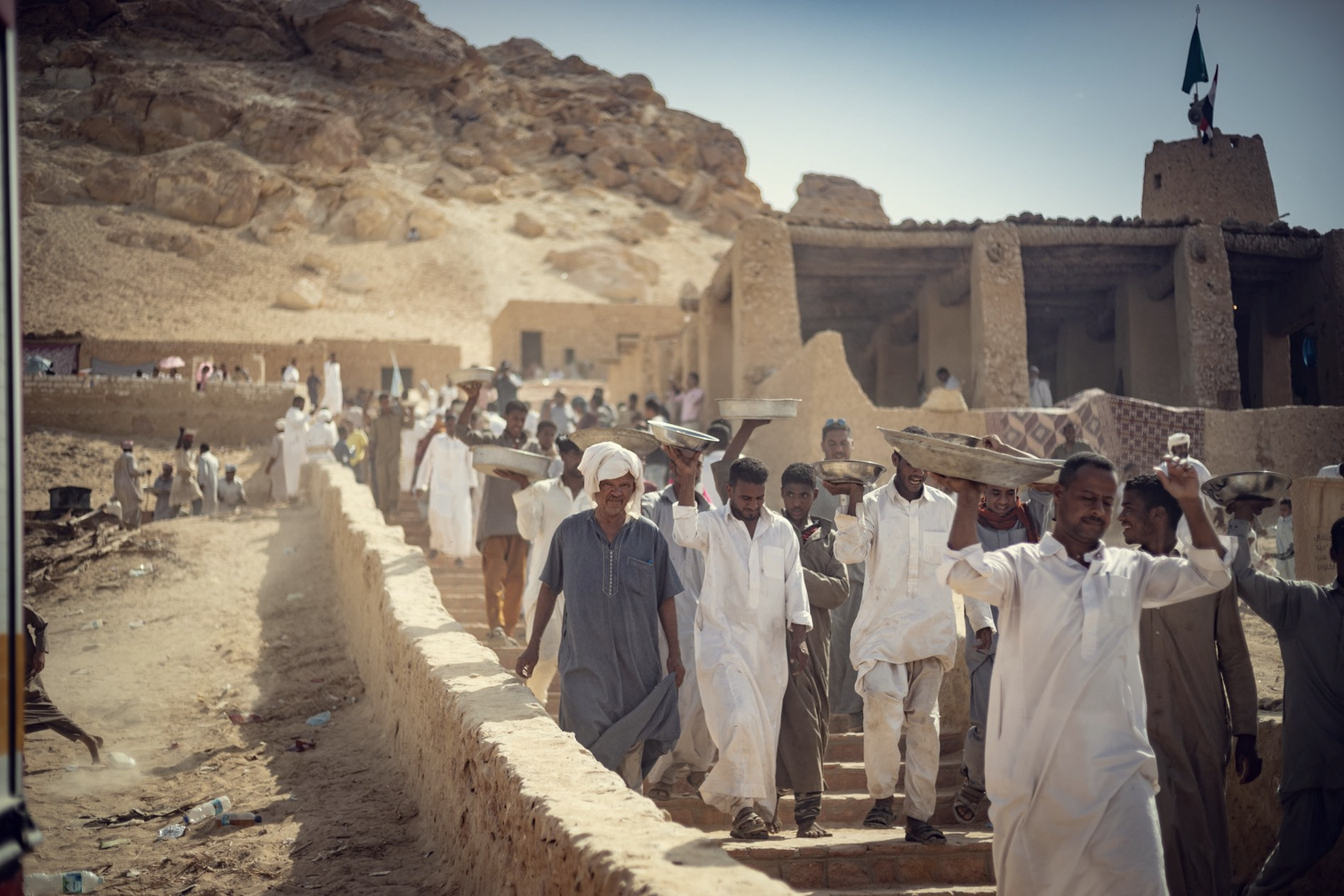
Men carrying large trays on their heads in a narrow stone passage in front of Mount Dakrour. This procession is the heart of the visual celebration. The food goes to the people, not the other way around.
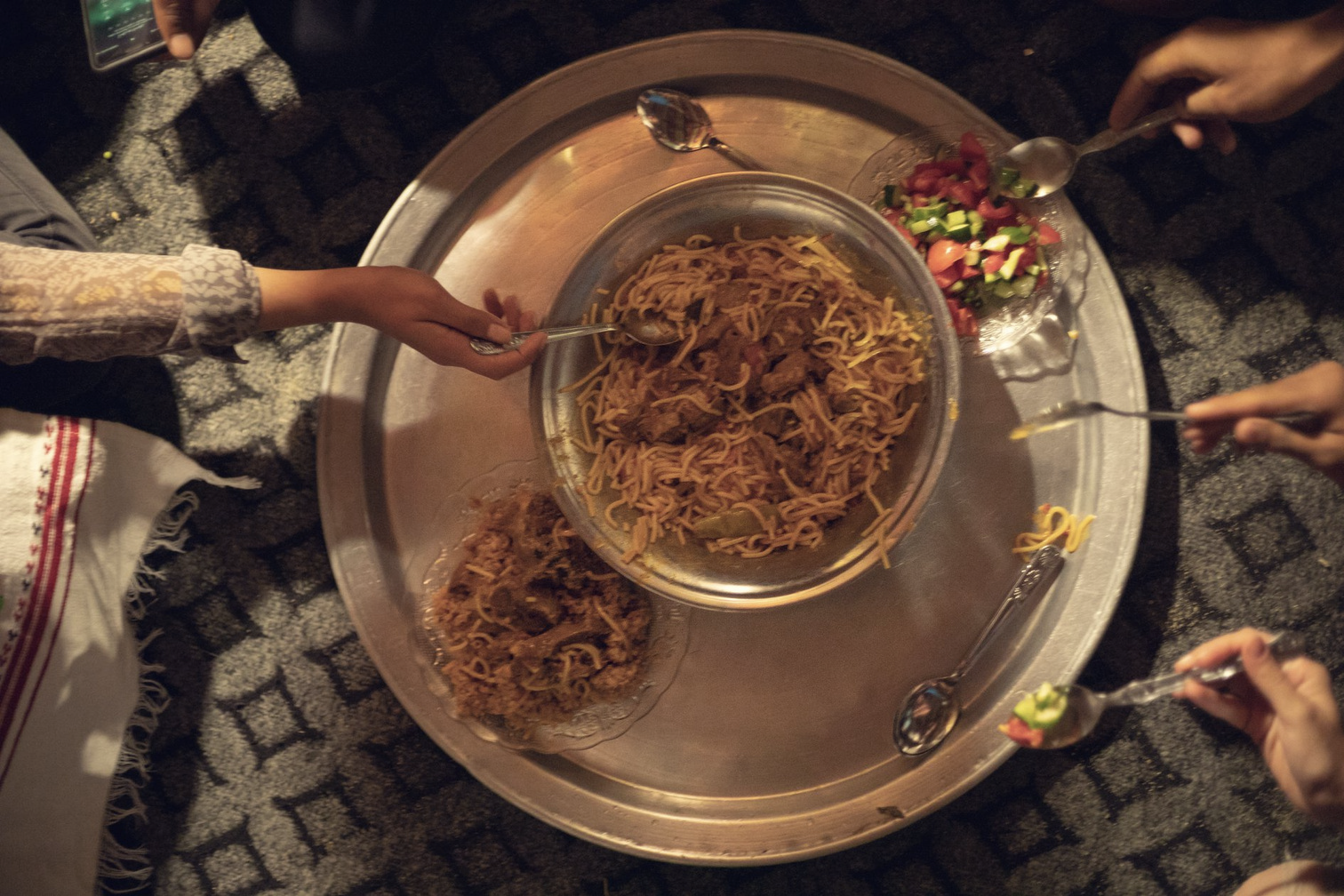
Four hands from different directions reach towards a single dish in the middle of a tray. No partitions, no separate seats. The communal table is a peace agreement that requires no signature.
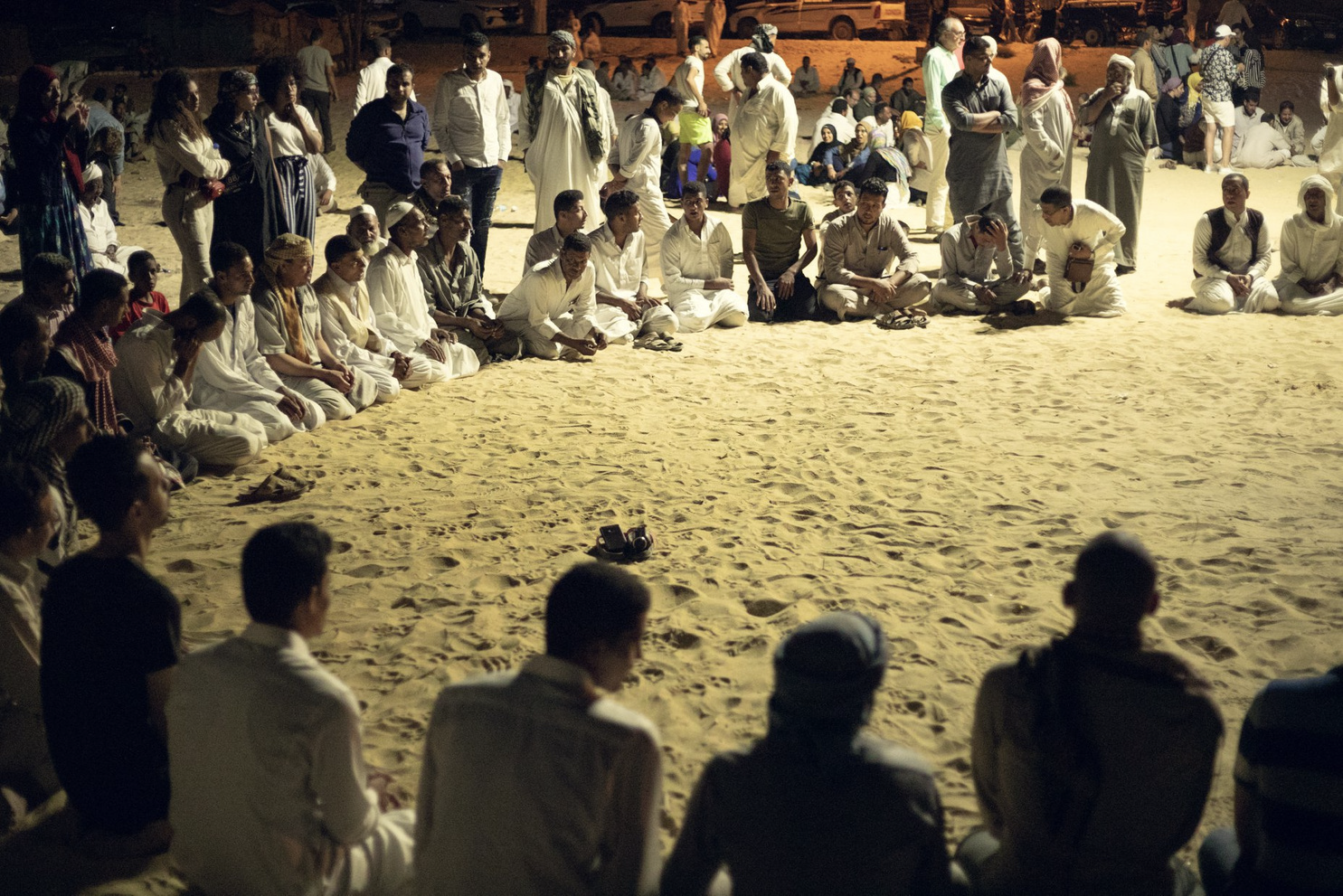
The men sit in a large circle to sing, golden light falling on their faces. In the circle, everyone is equal: the old man and the young man, the one who came from afar and the true Siwa native.
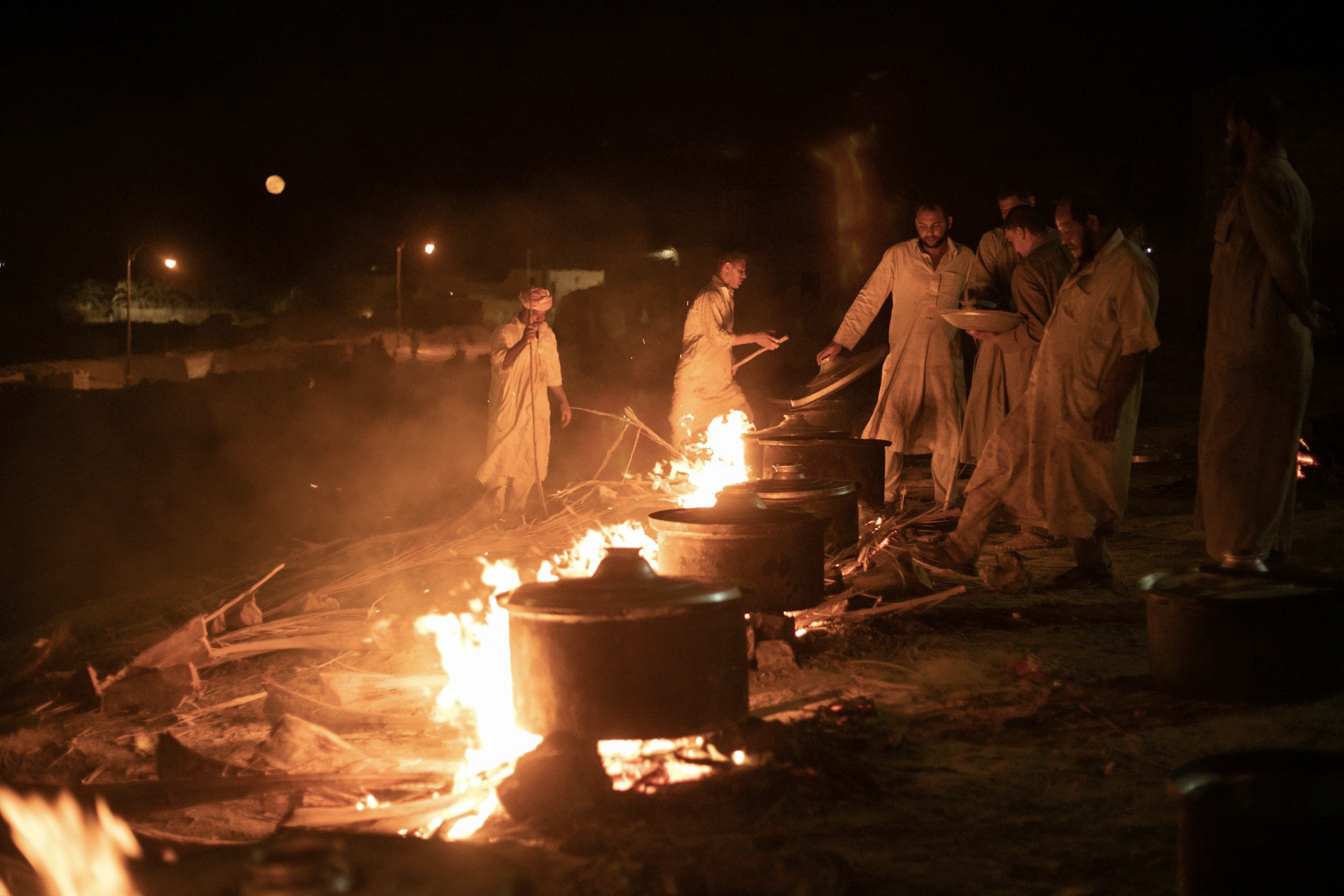
In the background, the moon appears on one of the three special nights of the celebration. Huge fires blaze beneath cooking pots; the food never stops; cooking is done day and night, because the feast must be enough for everyone.
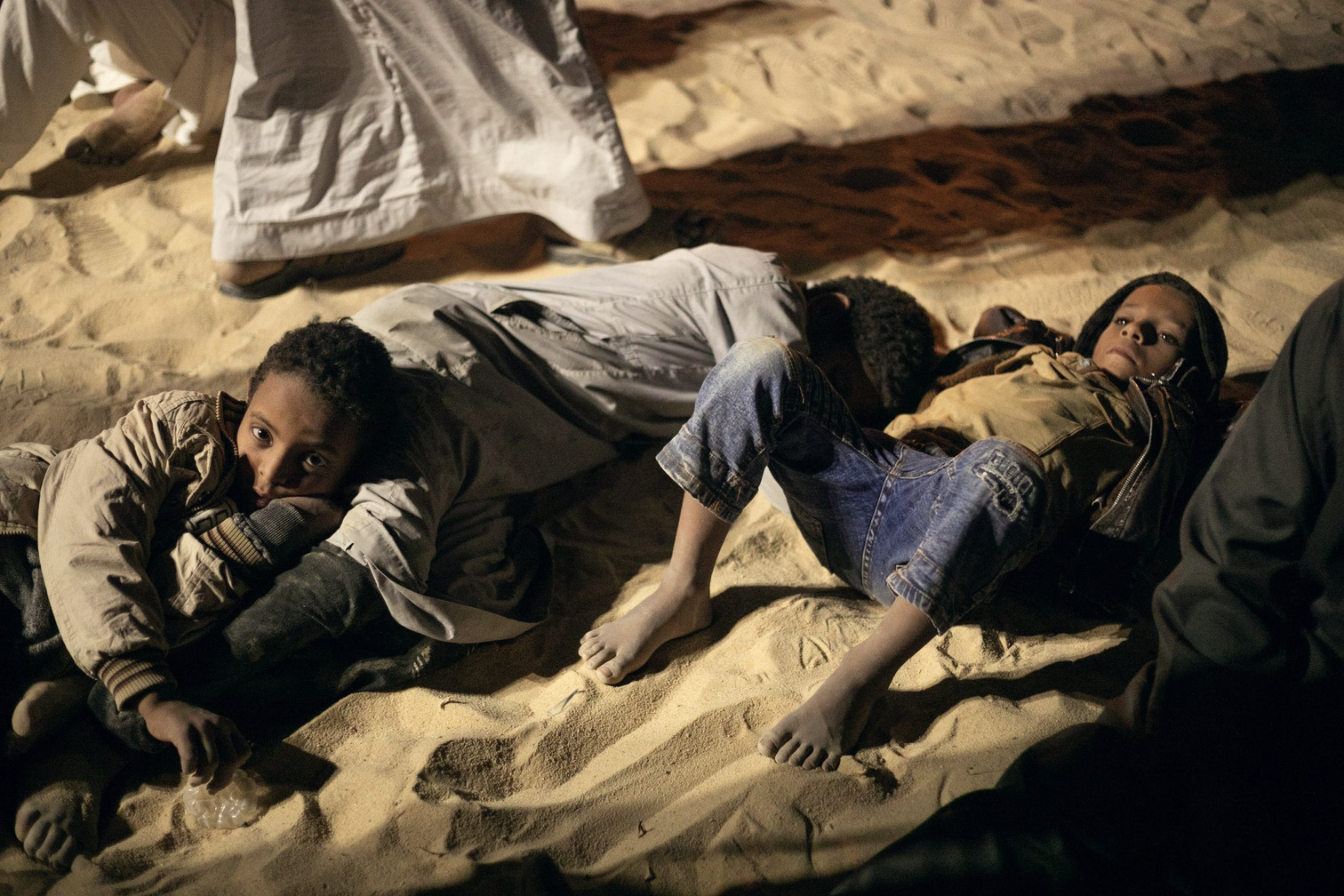
Three children sleep on the sand amidst the hustle and bustle of the celebration; exhaustion outweighs curiosity. This scene serves as a reminder that the Day of Reconciliation is not only for those who bear grudges, but also for the children who will inherit Siwa without hatred.
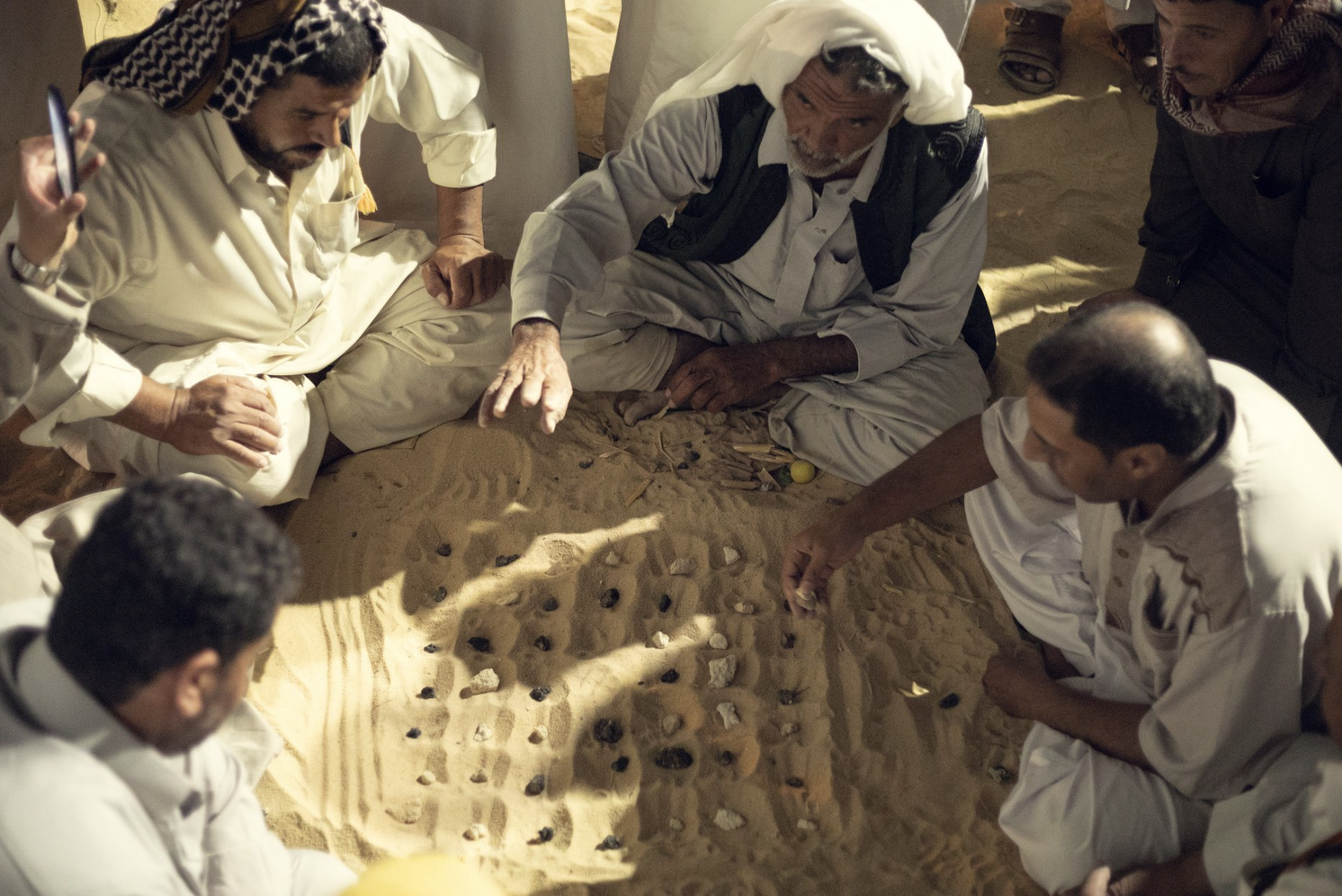
Men of different generations sit in a circle playing checkers; wisdom and humor converge around a single game. Reconciliation requires precisely this spirit.
“The continuation of Siwa’s Reconciliation Festival, is a tradition that has been maintained collectively for more than 160 years.
The value within this project does not come from objects as static symbols, but from their repeated use within everyday communal rituals. Bread, shared meals, and collective preparation gain meaning through continuous practice, care, and transmission across generations.
The festival persists materially through participation—people gathering, preparing food together, and sharing the same spaces and meals year after year. It is this ongoing physical engagement, rather than memory alone, that allows the tradition to remain alive.
By documenting these practices, the project highlights how continuity is sustained through lived actions that preserve social bonds, reconciliation, and collective identity over time.”
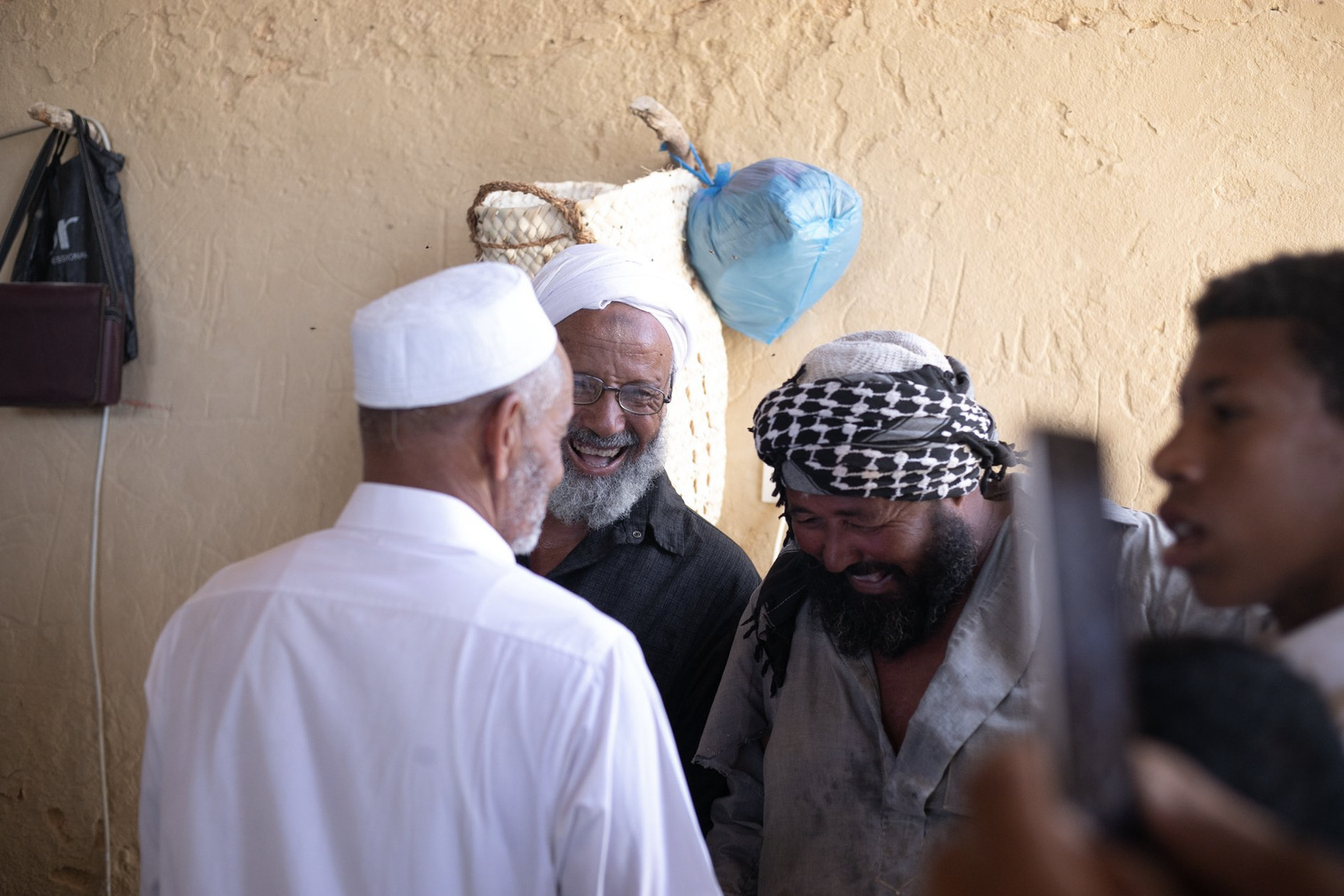
A sheikh with a white beard and a turban laughs wholeheartedly at another sheikh standing before him. No official cameras, no speeches—just a genuine laugh shared between two men. This moment is worth any peace treaty.
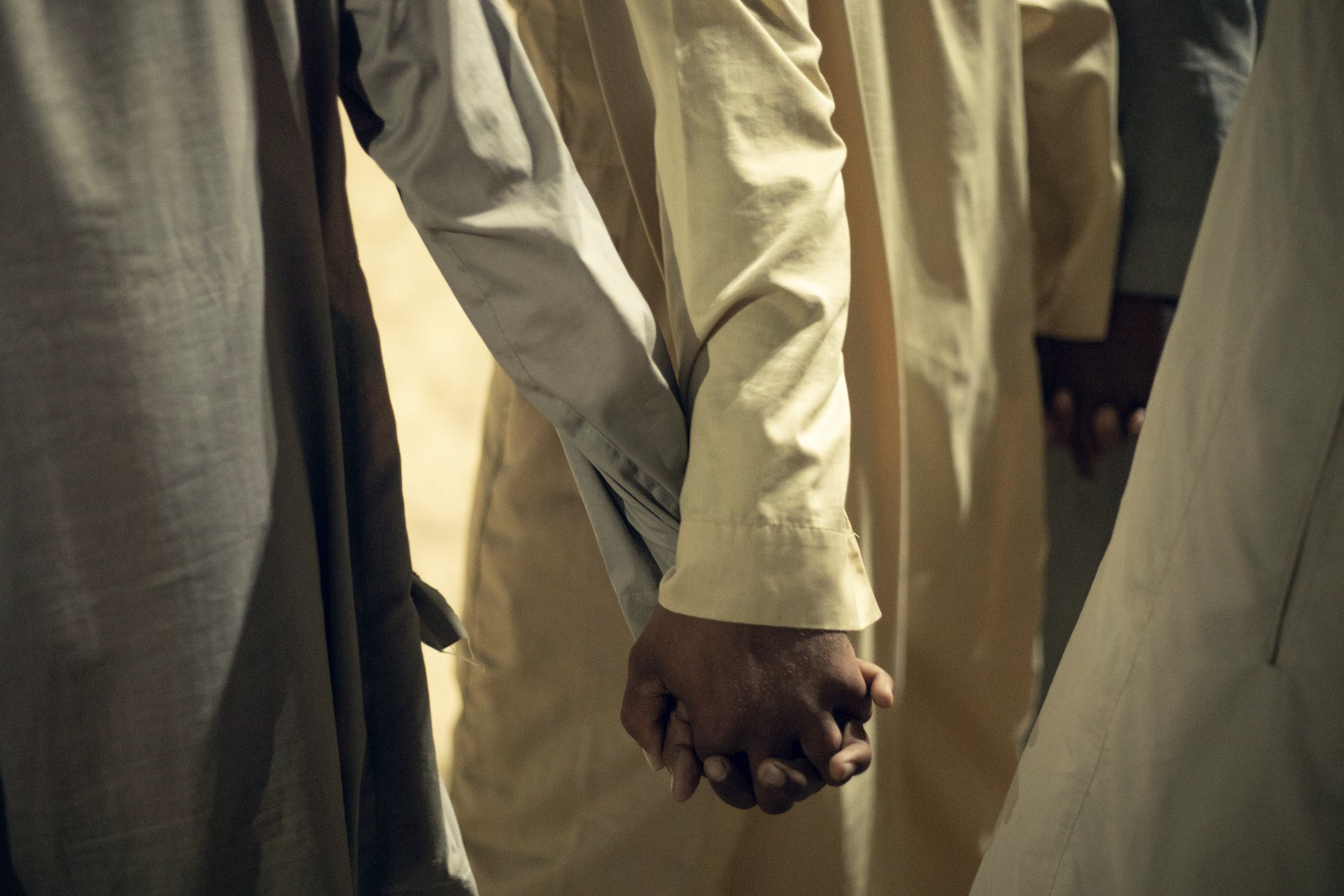
This alignment, with a song dedicated to it, is the highest degree of closeness and the absence of any grudge or hatred in the heart.
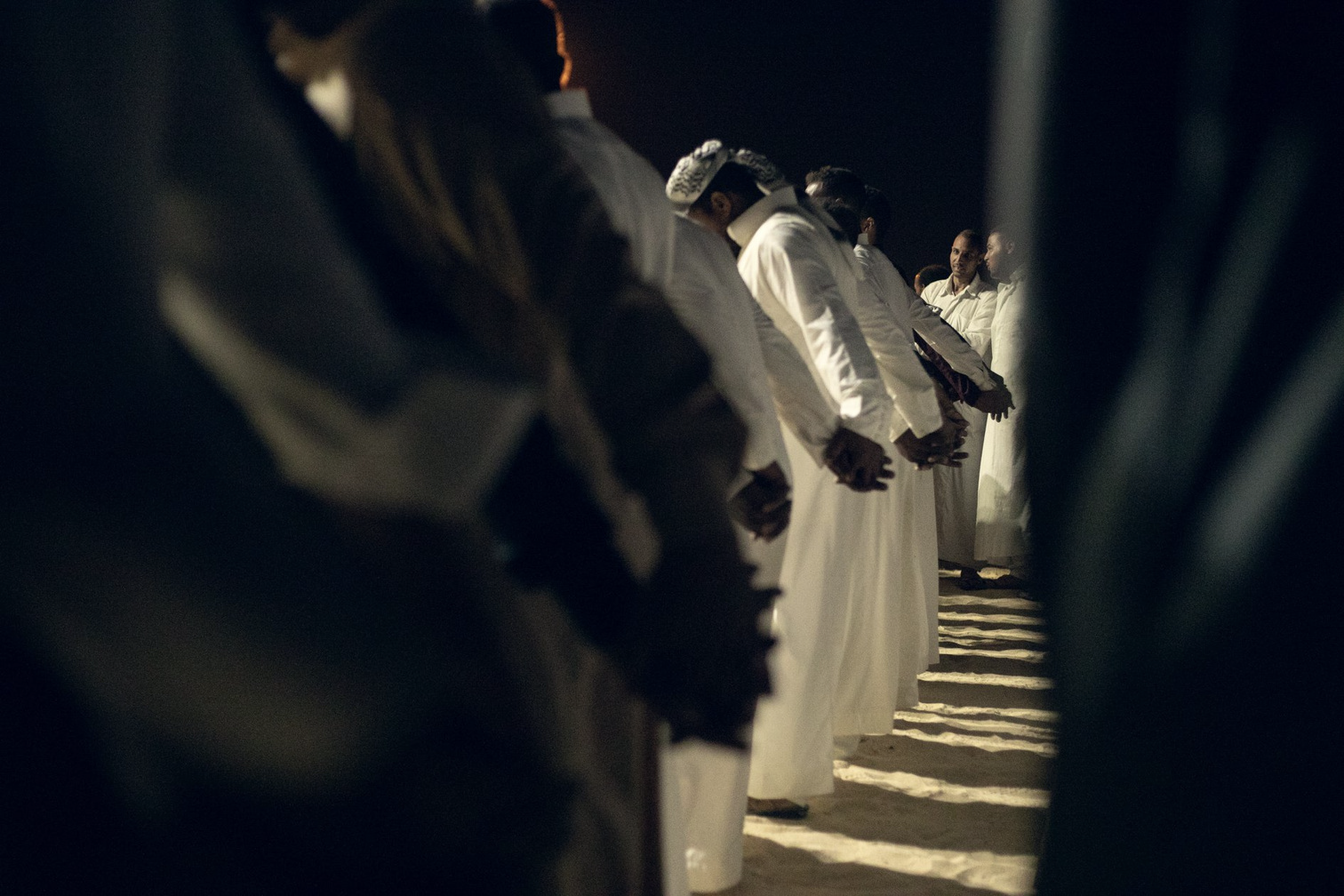
This line-up and dancing comes after the tribal elders rule that any new dispute that occurs between the tribes between one Eid and a new Eid has ended, so the disputes go away, and the people of Siwa celebrate the reconciliation between a reconciliation that has lasted 160 years and a reconciliation that has not lasted a year.
Mohamed Gamal is a survey engineer and freelance photographer from Egypt. He did not grow up in an artistic environment, and no one in his family was involved in photography or the arts. His interest in images developed independently, as he learned the fundamentals of photography through online resources and self-education.
He began practicing photography through documenting events and everyday work around him, before his interest gradually evolved toward visual storytelling and documentary photography. Throughout his journey, he participated in several local photography competitions and received recognition for his work.
After stepping away from documentary photography for several years, he later rediscovered his connection to the medium, returning with a stronger desire to use photography as a tool for documentation and human storytelling rather than simply a visual practice.
Much of the text above was translated electronically from Arabic into English. While every effort has been made to preserve the original creator's descriptions and intent as faithfully as possible, any errors, omissions, or unintended misrepresentations introduced through translation are unintentional and are not reflective of the publication's editorial intent.
Photography and feature by Mohamed Gamal