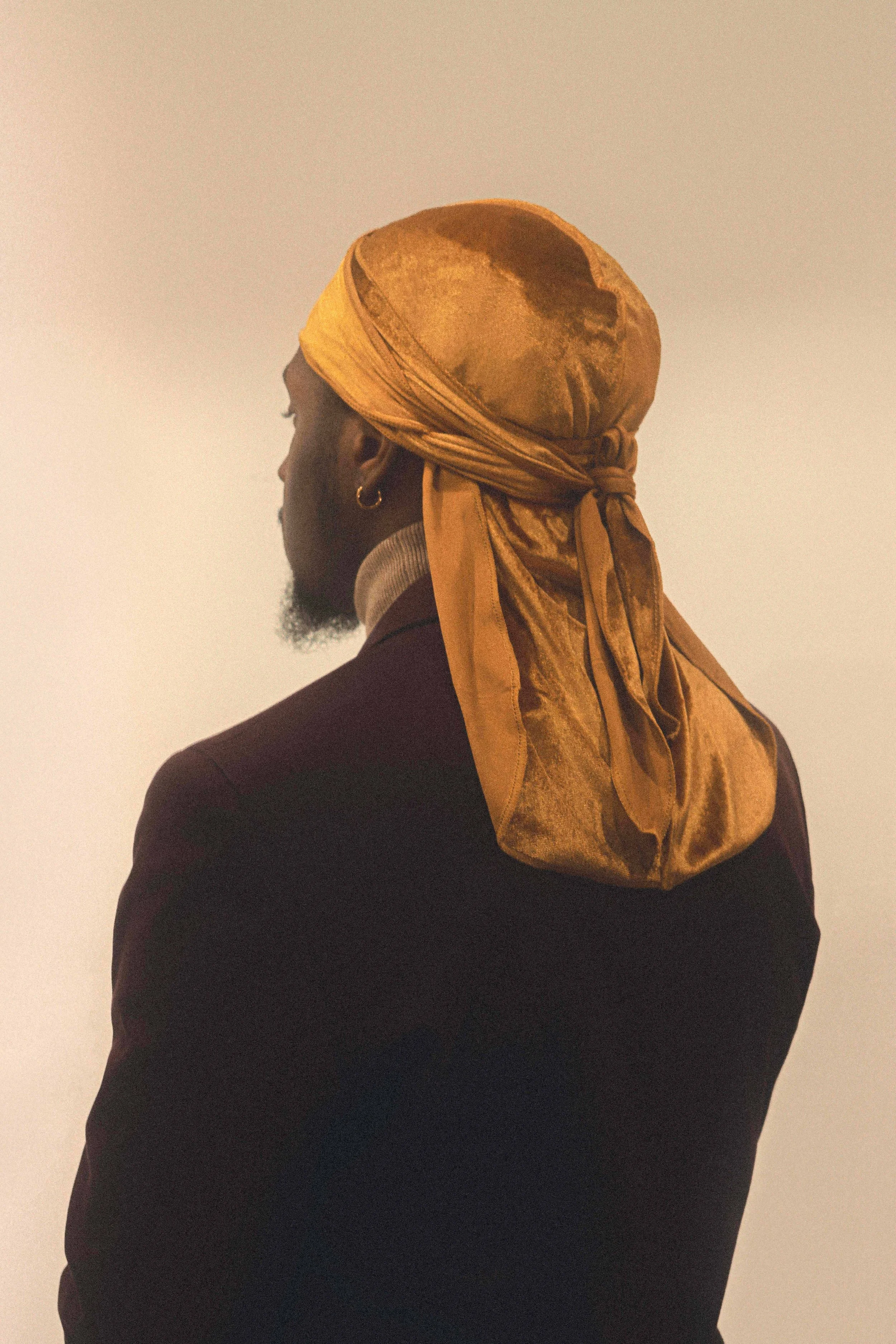
Interview with Kwan Holloway
A muse from Dapper Durags
Kwan Holloway, born and raised in Washington Heights and Harlem, New York, is a software engineer and multimedia creative working in corporate America. His portrayal in Dapper Durags extends beyond aesthetic alignment; it reflects a more personal and cultural narrative. As a Black man shaped by the vibrancy of a diverse city—its colors, textures, and evolving styles—his relationship with his hair has moved through distinct phases over time. His commitment to a signature hairstyle speaks to a broader, resonant question shared by many people of color: what does my hair say about me before I have the chance to speak for myself?
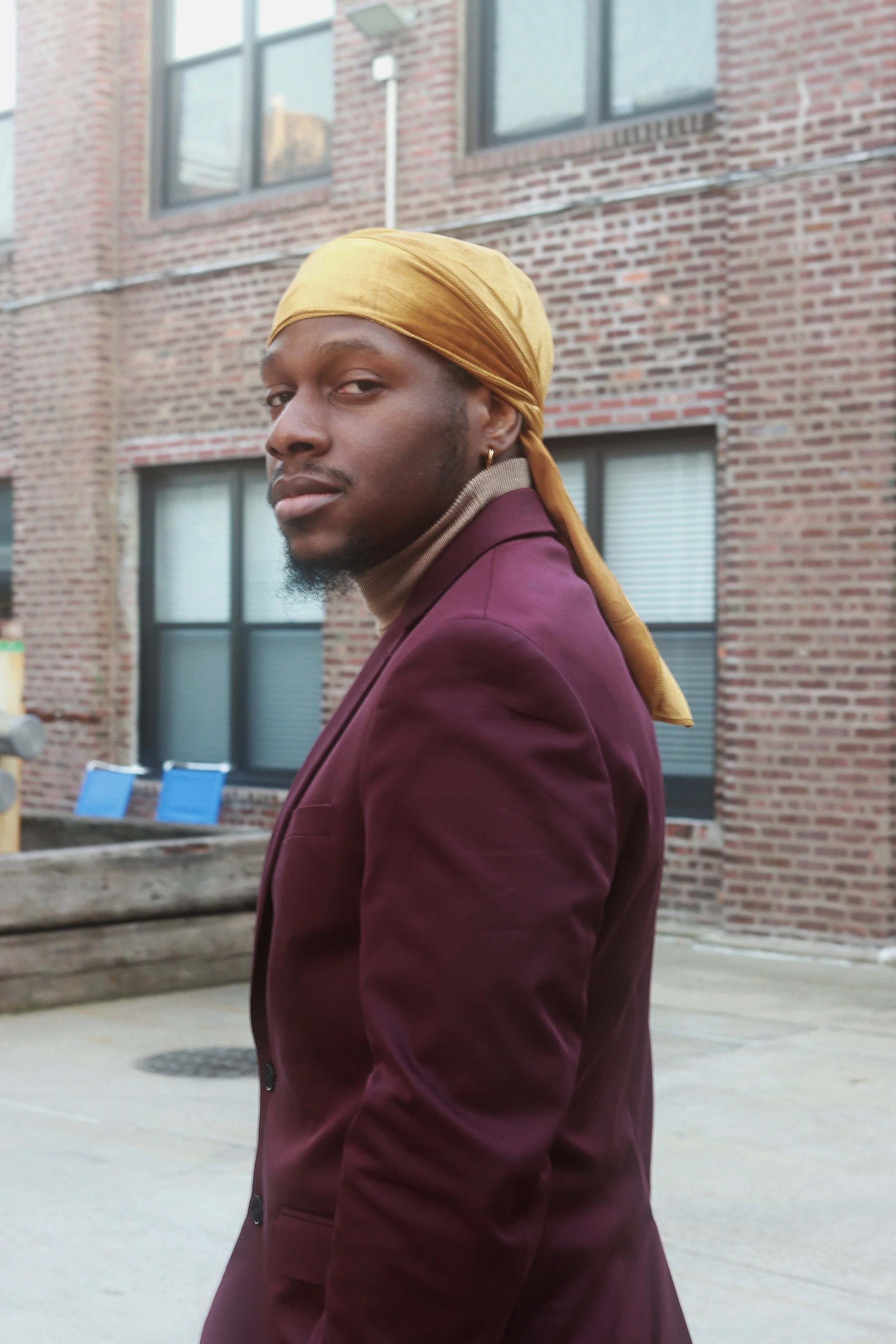
You usually wear an afro—what was it like to wear a durag for this photoshoot and what impact did it have?
It was a bit different because I usually sport the afro and I have for over 10 years—it’s like my signature style. So, while I can do different styles with my hair, it’s usually in an afro and my chances to wear a durag are few and far between. I can probably say I’ve worn durags maybe less than 6 months total in my life,. It was cool though because i’ve always liked the look, but having so much volume to my hair, I never have the chance to wear one. I got my first one for Christmas or a birthday—and it felt good, like I was tapping into another part of my culture, the “silky”—and here it was a “velvet silky.” It was empowering.
As a Black man, especially in corporate, do you feel any pressure around your appearance, and if so, has it affected your relationship with fashion?
I definitely feel pressure around my appearance in some way. It’s multi-faceted. There’s the classic—not wanting to come across as not Black enough to Black people, or coming across as too “aggressive” to non-Black people because of stereotypes. There was a time when [wearing] too much streetwear had negative perceptions—maybe it still does. I have a variety of fashion styles—including what I’ll call the “dapper Black man”, but then there’s pressure and expectation around that too because I also don’t want to convey the message that I’ve conformed too much. But I’m confident in myself and in my fashion sense, and I have a good relationship with it now.
What were your thoughts when you heard about the theme of the photoshoot and were asked to be a part of it?
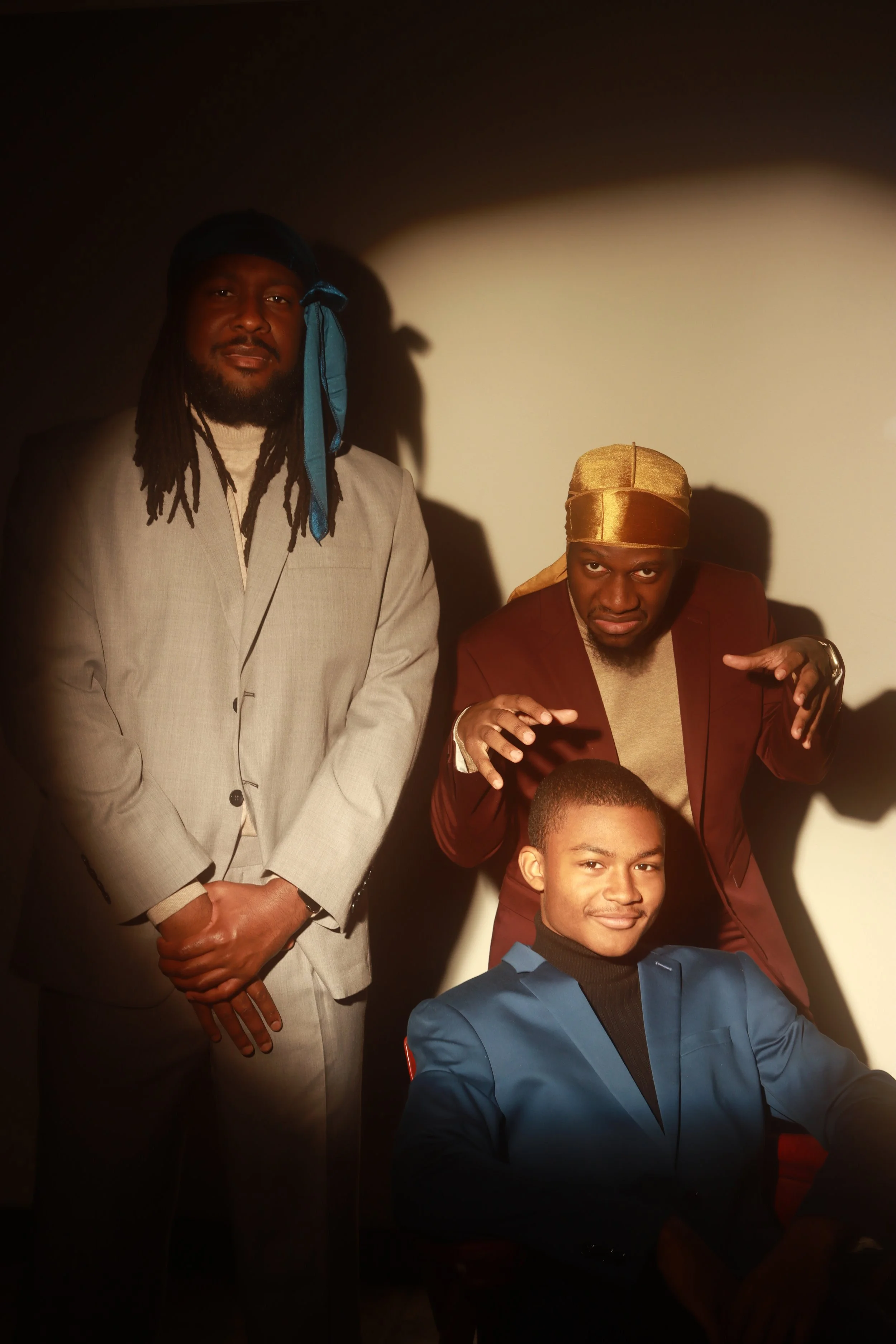
I thought it was an interesting concept. It’s no secret that hair is a very serious thing to Black people, and a big part of our culture—one that thrives in spite of the impact of colonization. Hair presents itself in different ways in this shoot—like the buzz cut, which I think represents assimilation into Whiteness since we were often forced to cut our hair due to its misunderstood texture. But we reclaimed it in a way—it’s a classic style in the Black community. Then there’s Darryl with the locs, leaning into another side of the culture, and my hair is in twists under the durag, which is kind of in-between—it’s versatile. It resonated because Black men—Black people aren’t one-note, we are very all encompassing.
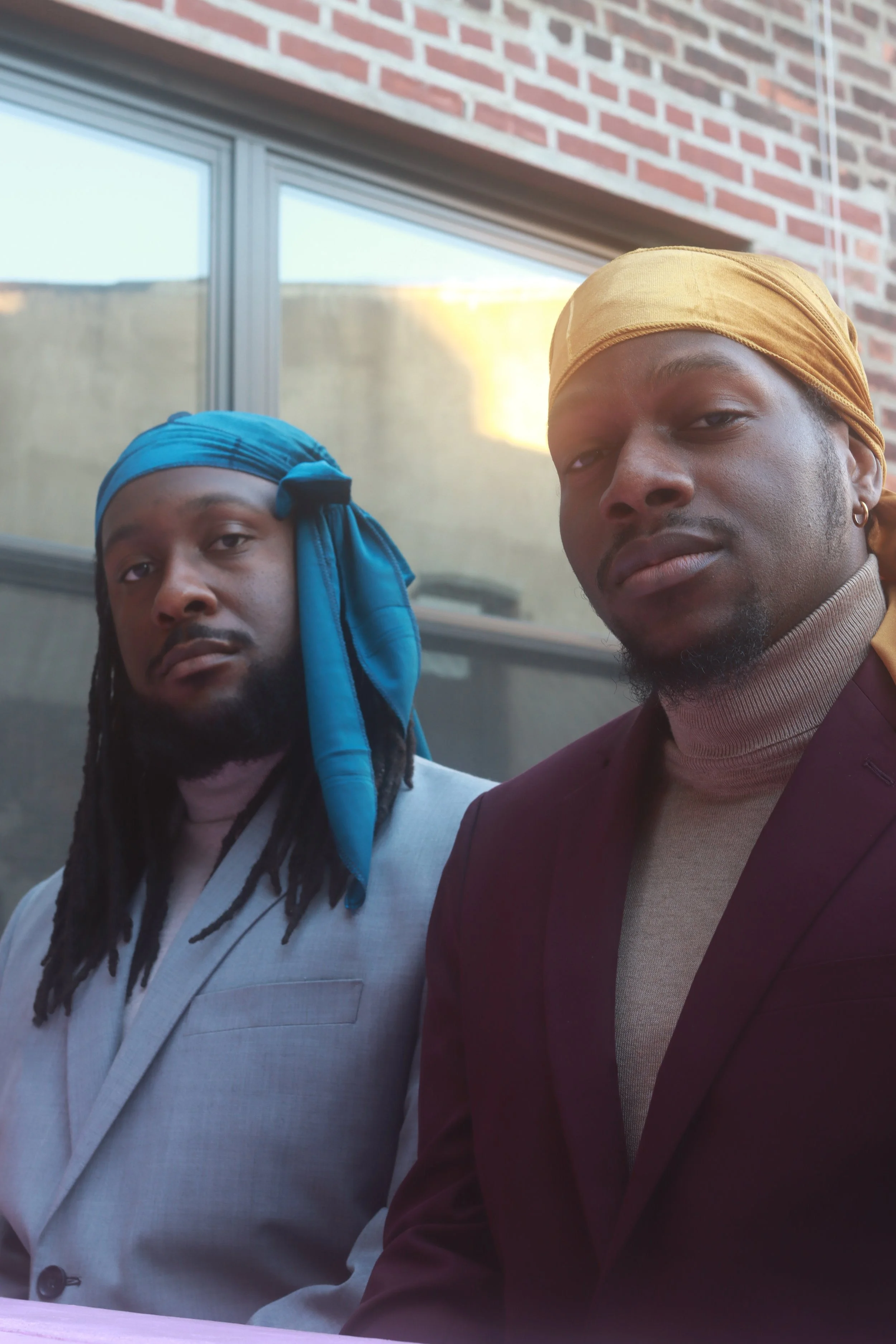
How has growing up in New York influenced your relationship with your hair and how you present yourself?
That’s a good question. New York [City] is about it’s multiple cultures, and so I grew up in a very Dominican, Caribbean, West Indian environment—and so all of that meant “cut your afro.” Because of the remnants of colonization, there’s the lingering narrative of ‘a Black man needs to cut his hair because, you won’t get a job with your hair looking like that— you won’t get a girl with your hair looking like that—you wont get ‘x’ with your hair looking like that’ and their idea of good hair, was ‘just cut it—it’s ugly, it’s bushy, it’s nappy.’ For most of my life, my mother and grandmother were always like ‘cut your hair’, and then when I started to grow out the ‘fro for myself, they would not stop telling me to cut it. Especially when I was graduating college and looking for jobs, they encouraged me to cut my hair because they said, ‘they won’t hire you if you don’t—you should cut it to make sure you have a better chance’, and I remember telling them, ‘if they won’t hire me because of the hair that naturally grows out of my head, then that’s not the job for me.’ I had to fight against that as a teenager, do what felt good for me, and live in my truth with my hair. You can ask anyone, if they had to associate me with anything, the way people find me from down the block is with my afro— the way people draw me in caricatures, it’s primarily my afro. It’s a part of my identity that I’ve come to love.
The Black community is very big on protecting hair with bonnets, durags, and “protective styles”. How do you feel about concept of durags as a symbol of protection around Black identity?
I think it’s exactly that. We are very intentional about our hair and our bonnets and durags can be literal shields against the elements and the environment. I remember the difference between the health of my hair when I wasn’t wearing something to cover it while I slept—now it’s essential. Symbolically, it represents a shield too—one that protects our self-expression, our self-care, and in my case, a huge piece of my identity.
What would you want to tell people who are learning to embrace their hair as it is?
That it’s worth the work, even if it’s not easy. Maintaining black hair whether its curly, coily, kinky—can be a test of endurance, and I don’t mean that in a derogatory way. But it can tangle, it can break—in certain environments especially. It can be a 4, 5-hour long process to wash and style our hair. But it’s a labor of love. Good things don’t come easy, and there are are lot of people who say ‘Our hair is too much work— I don’t want to deal with it, so I’m just cutting it’ as if it’s like a weed that’s growing out of hand. Your hair is not a weed to be yanked out at the slightest inconvenience. It’s worth the work. People are going to combat you, and it’s a labor in that you do have to fight to be yourself because the world wants you to conform. Don’t conform. Take the time it takes to be you, don’t take the quick way to be someone you aren’t. No beef to buzz cuts or caesars though, if that’s you, then rock that too, just don’t feel forced to wear those styles.
What’s your favorite picture from the project?
Probably the one with all of our eyes closed, and mine and Darryl’s hands on Jonathan’s shoulders. I love the lighting and the composition. It feels like because our hands are on his shoulders, there’s something symbolic about a passing of energy, a passing of experience—since we both have about 10 years on him. His hands are clasped too and it feels like the energy we’re passing on to him is flowing back up to us too—taking what wisdom he learns back up to the older generation.
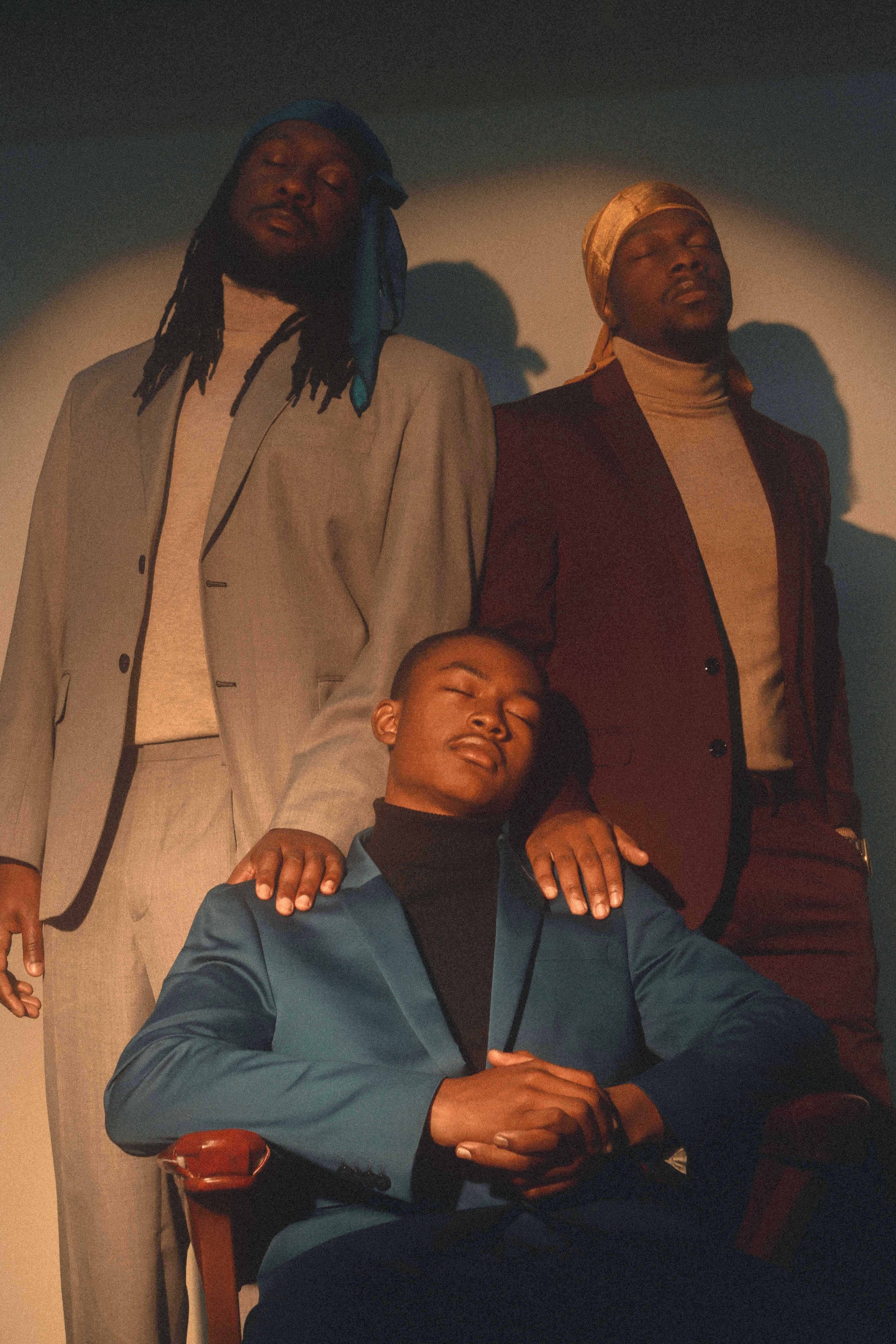
Photography by Ashley Munro
Interview by MUNREAUX
Featuring Darryl Baker, Kwan Holloway, and Jonathan Robinson