There is a version of her that was promised.
She knows this because she has seen her—pressed between the gloss of photographs, folded into letters never sent, written in the incautious cadence of a younger hand that believed time would behave. That version of her sits at the center of every expectation: passive but certain, desired but contained, blooming on schedule. Her life measured in milestones—first love, marriage, children, legacy—each arriving as predictably as notches on a wall clock.
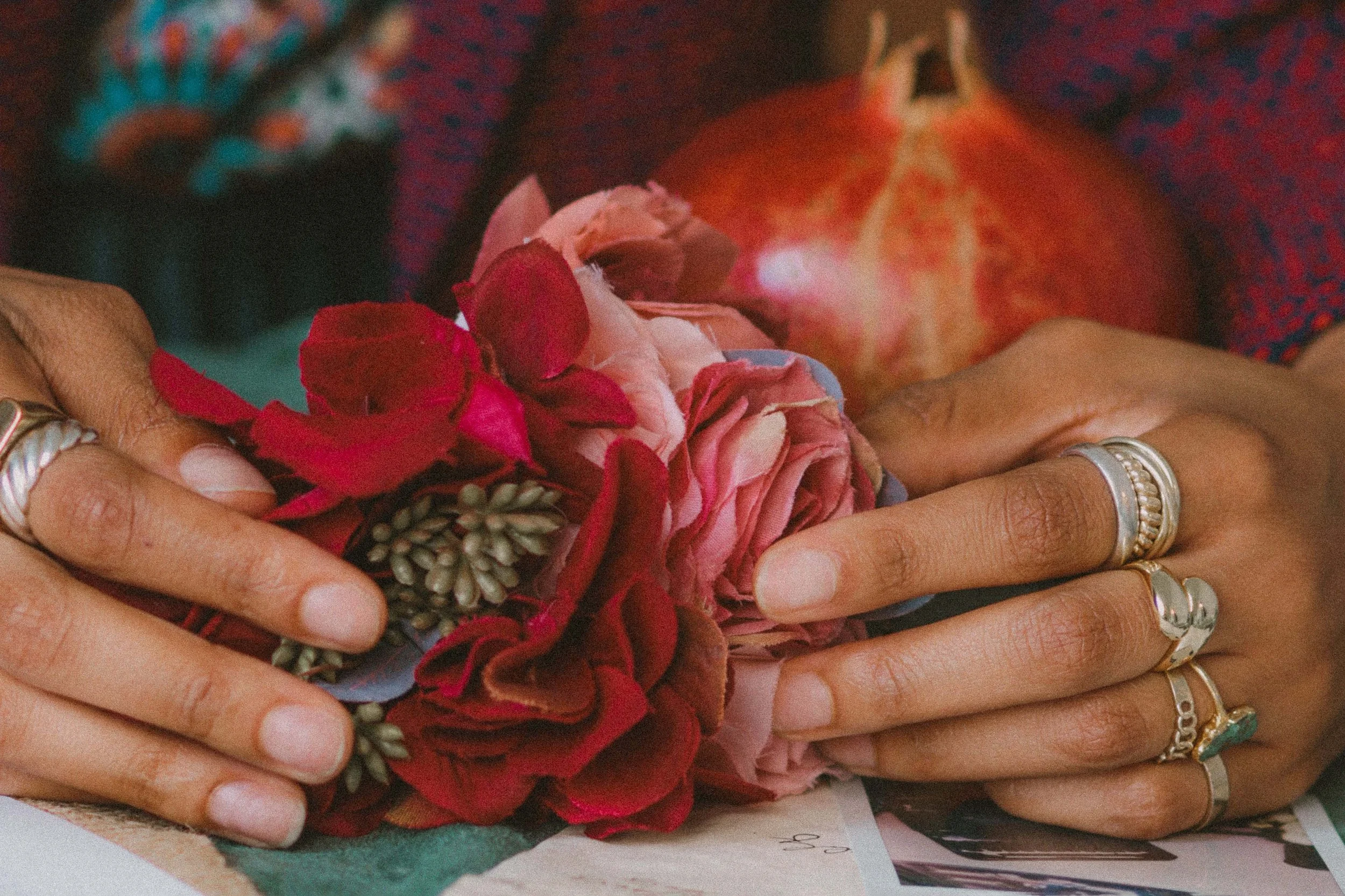
Photographs show a smile that shone naively, brightly. The letters read like negotiations. A journal holds more questions than answers. Artificial flowers remain unwilted—unchanging, intact, unyielding to decay. She cups them protectively, as if guarding the illusion itself, for herself, by herself.
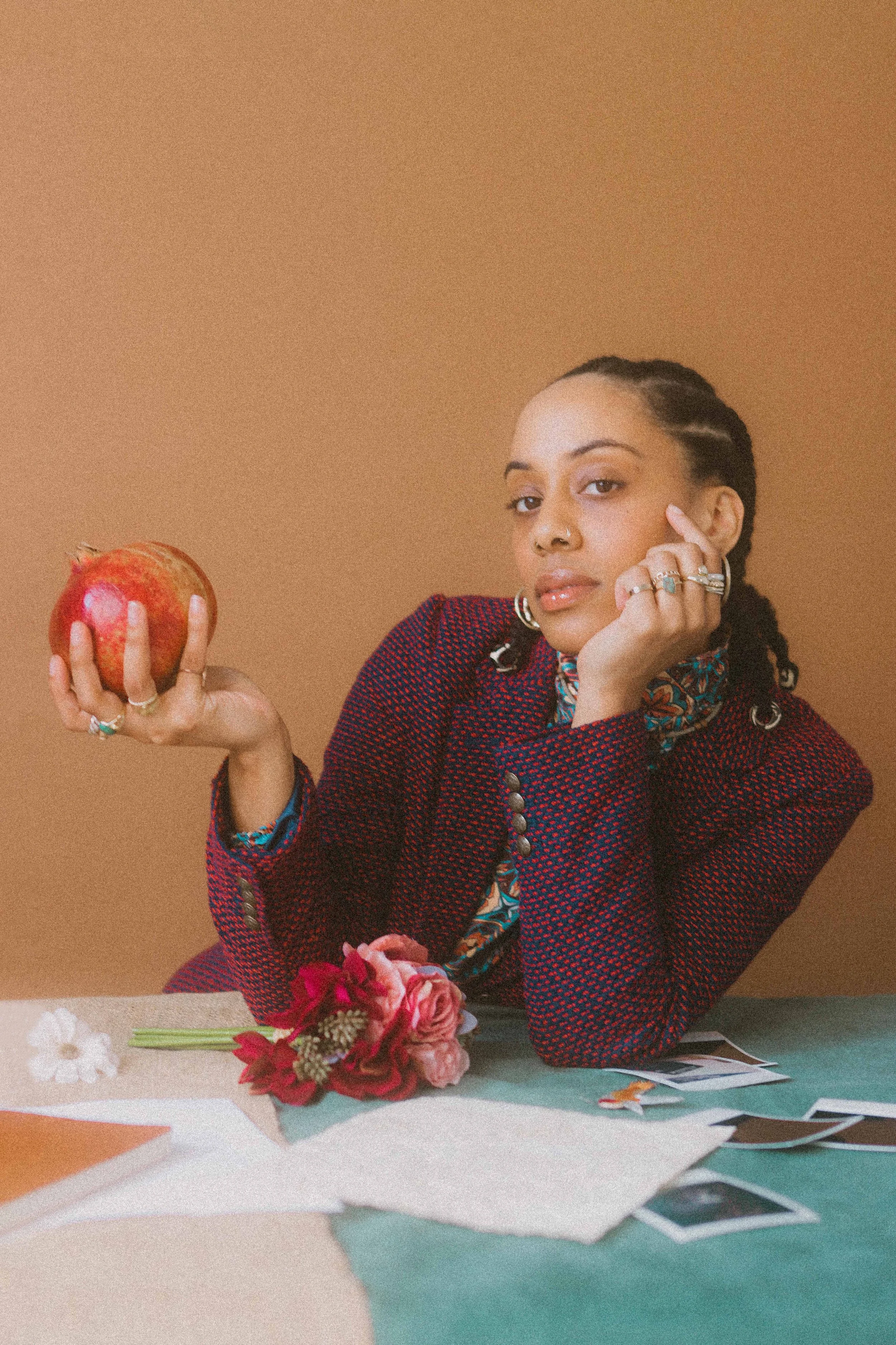
A pomegranate rests heavy and full in her hand: fertility, abundance, and the implication of possibility. She holds it with confidence. She still believes she can choose what it means.
The light shifts.
Disillusionment creeps in not as a rupture, but as a slow realization— a quiet understanding that the life you imagined looks different when you’re living it. That the body you were told would bloom on command may move to its own rhythm. The pedestal, yours and others’, is not a guarantee, but something you can accept or refuse.
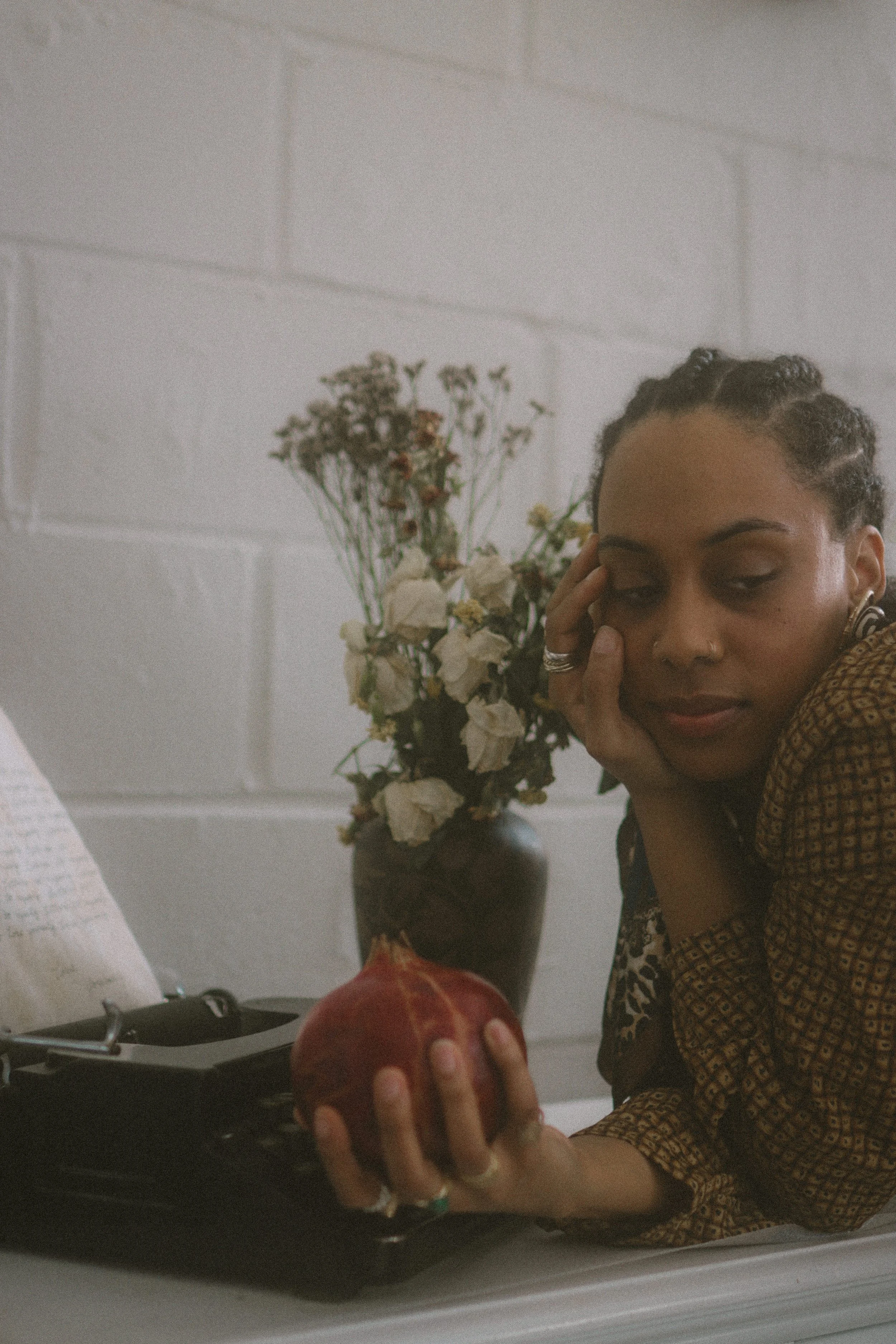
She leaves the table, taking the pomegranate with her. It looks different now. Or maybe she does. Its weight feels less like promise and more like evidence—of time, of pressure, of expectations that were subscribed to her against her will. Behind her, a typewriter sits still, as if waiting for a story that won’t come together cleanly. Dead flowers linger nearby, their decay honest in a way plastic ones never were.
Nature does in fact, wilt. Not just what didn’t happen—but the version of herself that was built around it. Imagined timelines. Shifted milestones. Quiet comparisons that surface during birthdays, weddings, or in passing questions—‘When are you going to…?’
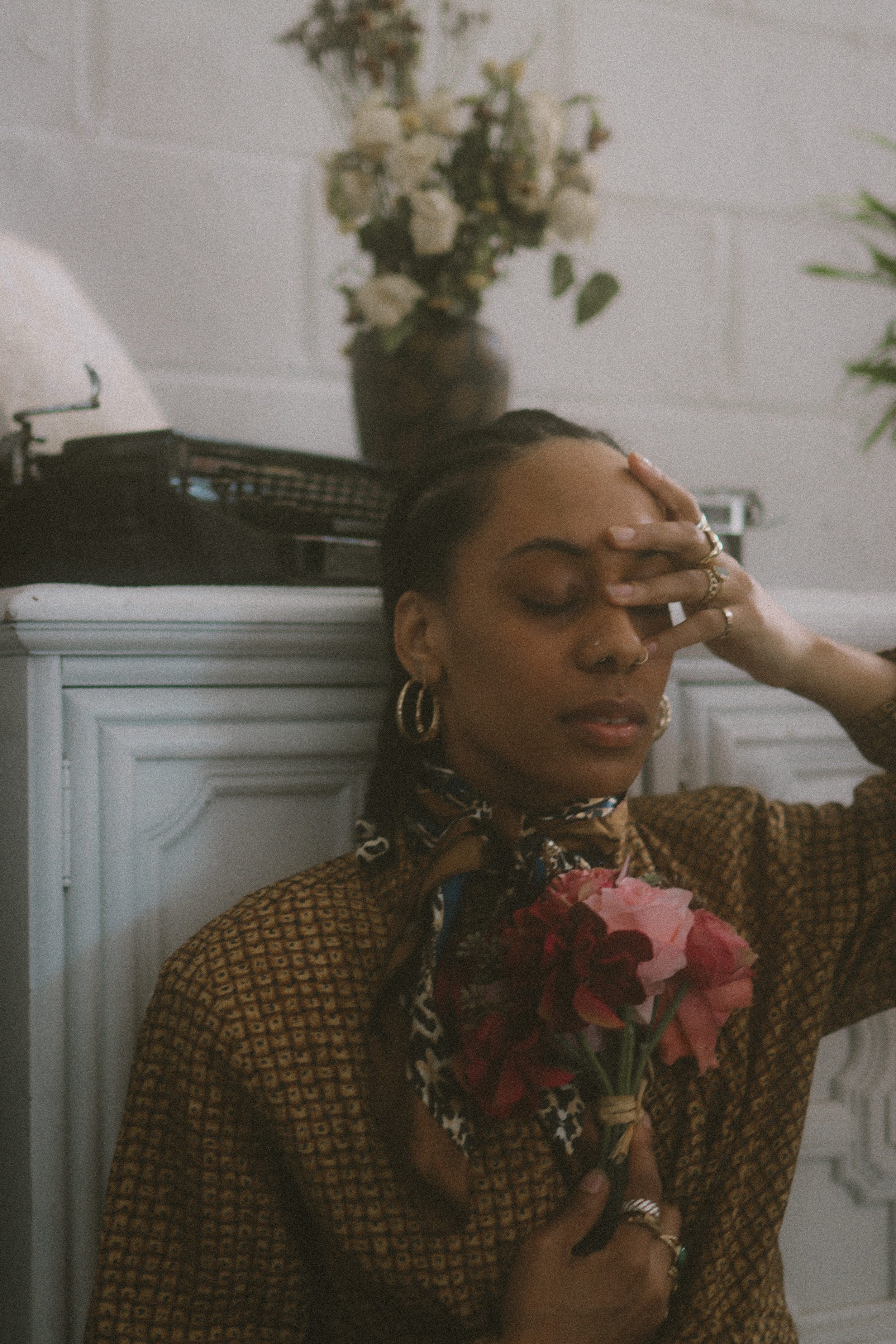
Grief lives here.
The clock still ticks. Is it in front of her? Behind her?
She gathers the fake flowers to her chest. Holds them close, not as protection, but as acknowledgment. There is still tenderness here. A recognition that even illusions have their place—they carry us until we can carry ourselves. She no longer waits for permission to begin again.
Reclamation. Not of the life she was told to desire, but of how she moves through it. The understanding that fertility is not only biological, but also creative and relational. That the ferventness of purpose begins and ends with the self. That flowers—real, fake, blooming, or wilted—do not define her worth, but can still be held, examined, honored. That love exists in many forms, especially her own.

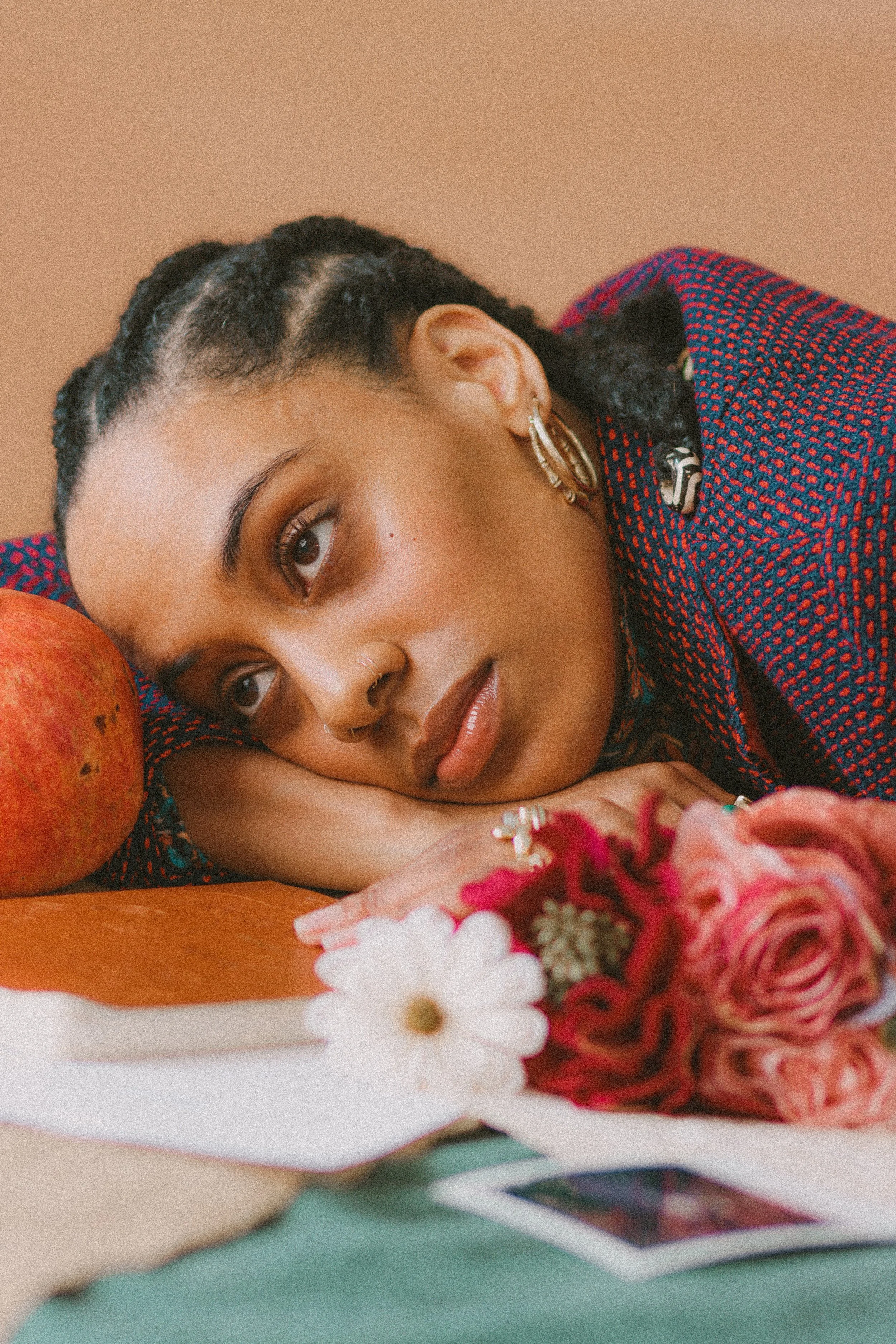
She leans into her own hand, her face resting gently against it, a subtle smile forming—the smile of arrival, of recognition. Of understanding that womanhood is not a fixed destination but something that shifts and returns.
Questions still arrive, but she meets them differently. The quiet pressure to explain herself—to make her life make sense to others, doesn’t carry the same weight. She is learning not to over-explain. Not everything needs context or defense. Some things are allowed to exist as they are—unfinished, unclear, and entirely her own.
There is freedom here, but it is not loud. It lives in the quiet decision to rewrite the narrative. To give tribute to memories without being confined by them. To exist fully in a life that may not align with expectation—but is clearly, steadily her own.
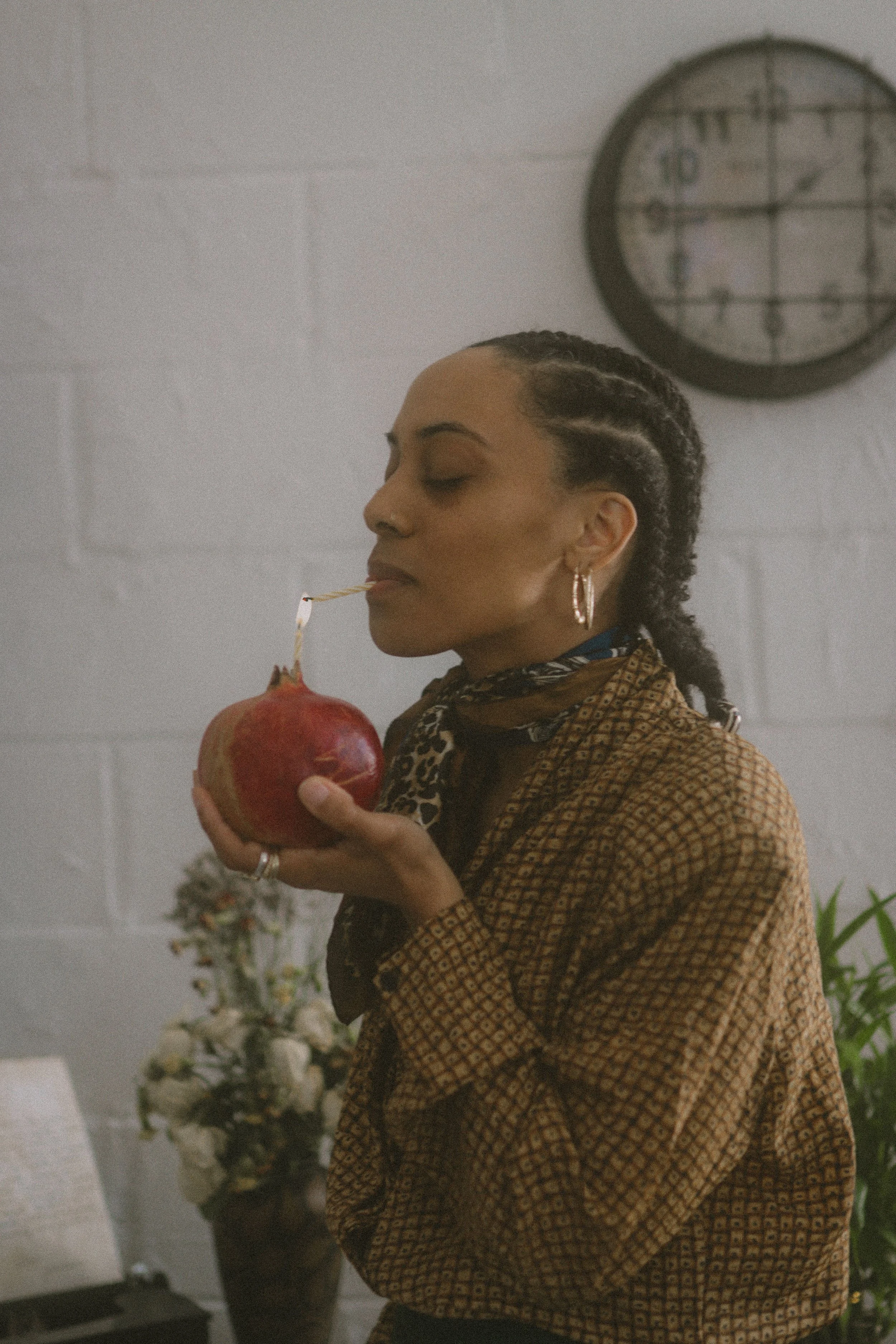
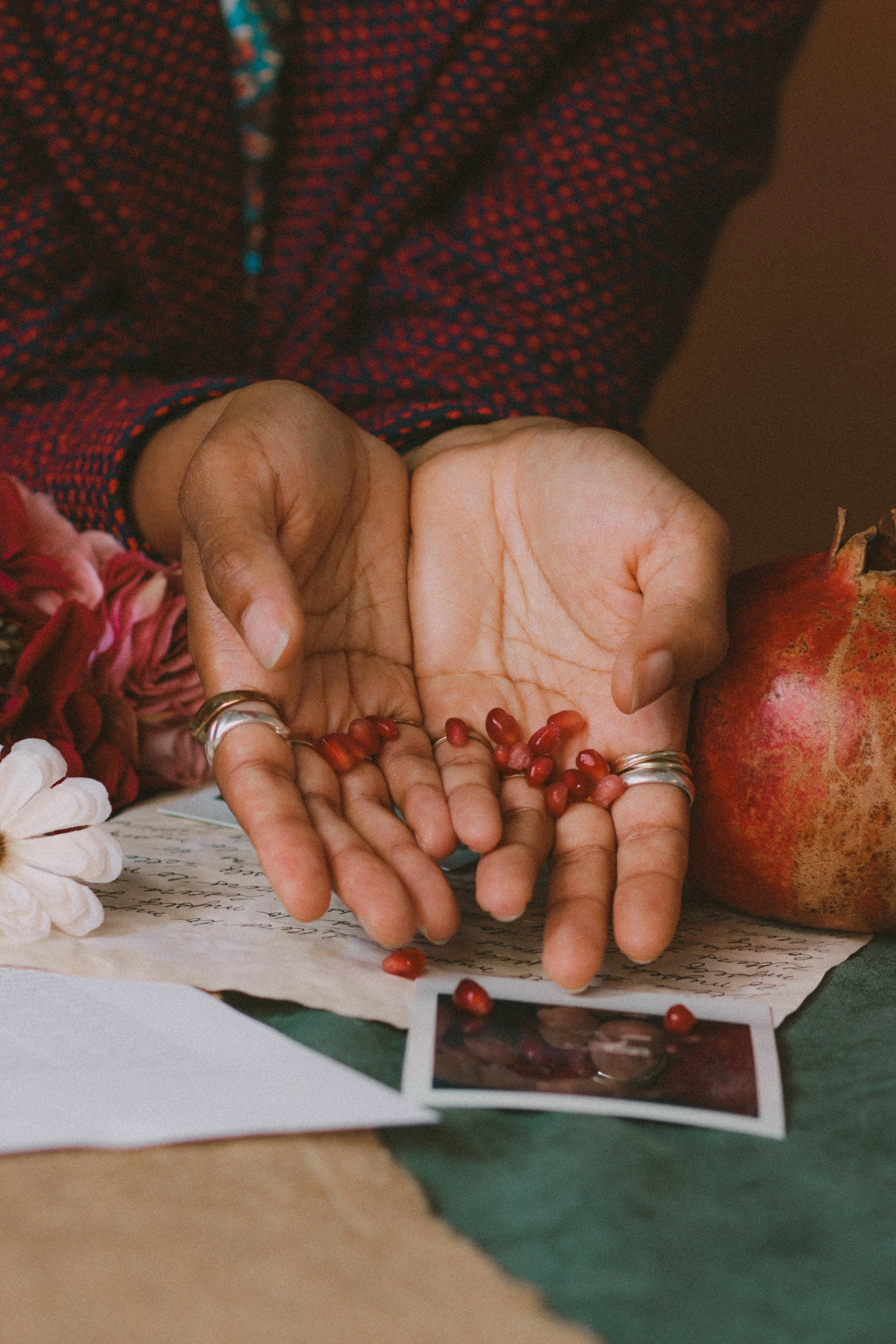
Birthdays have always marked time as something external—something that happens to us. But here, she creates her own ritual. Marks it in her own way. Holds both the fruit of expectation and the acceptance of time in her own hands, and mouth, and breath.
She honors her letters to herself.
Not apologies. Not explanations.
But acknowledgments.
Of who she thought she had to be.
And of who she is—becoming, unbecoming, and becoming again.
Photographed and written by Ashley Munro for MUNREAUX
Featuring Maria Burgos