issue 002 - OPEN CALL.
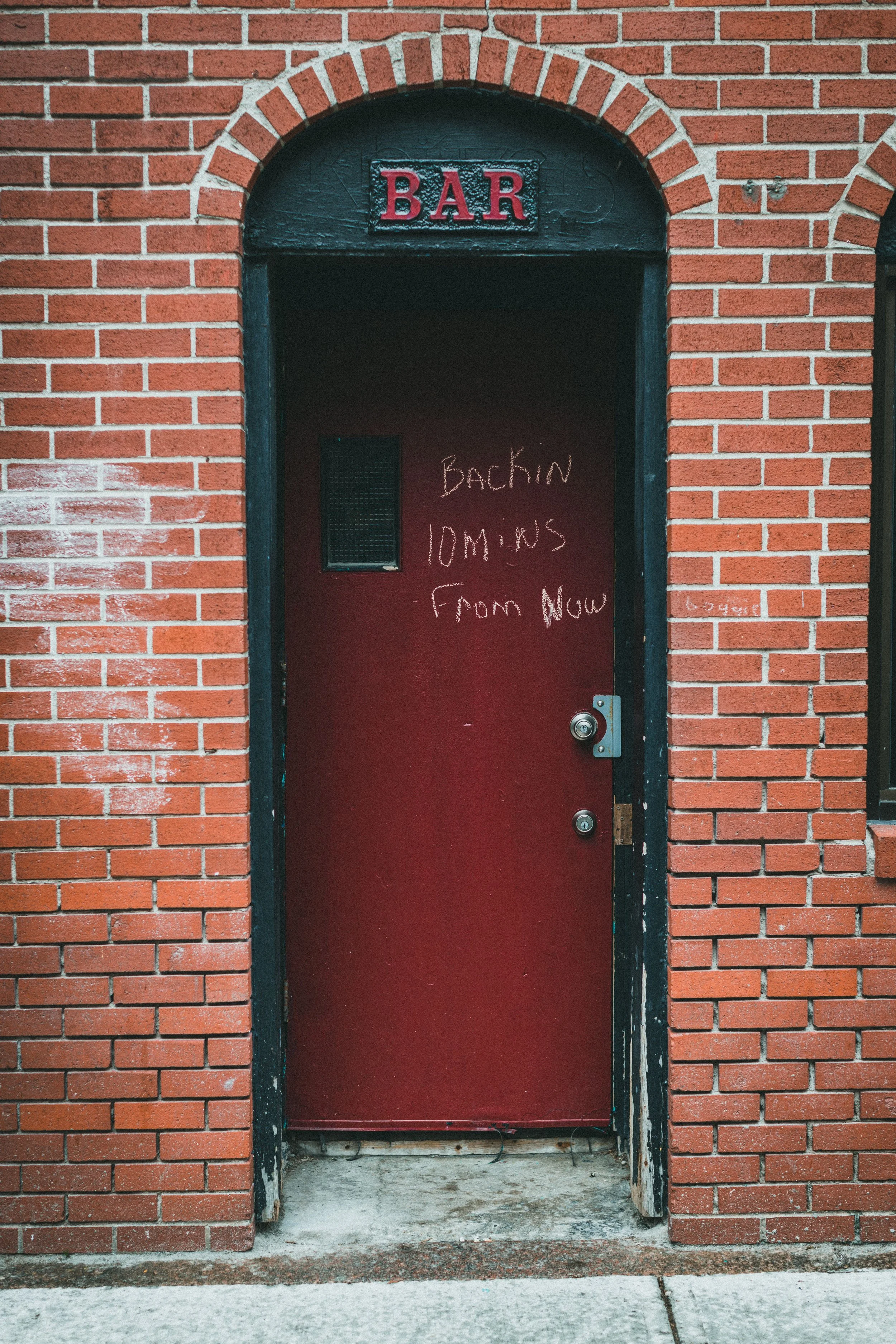
Some distances can be measured in miles. Others live in the space between two windows, across a hallway, in an unsent letter, at the end of a voice note, or in the pause before someone answers.
WHAT.
We are interested in the routes—literal, emotional, accidental, improvised—that messages take as they move between people. A familiar street. A repeated commute. A neighbor overheard from their window. A conversation translated, interrupted, misremembered, or passed along. A gesture that becomes a language. An object made to carry meaning from one pair of hands to another.
What does it mean to communicate within the boundaries of the everyday? How do proximity and distance shape what we say, what we hear, and what gets lost along the way? What travels between us without ever being spoken?
What this theme may look like in practice:
A photographic series documenting the rituals, gestures, and accidental exchanges that develop between strangers who live within sight of one another accompanied by written accounts of sounds, conversations, music, arguments, and languages overheard.
A series following several people who travel the same few blocks every day but never meet: the mail carrier, a delivery driver, a crossing guard. Their overlapping movements create an invisible map of proximity.
A short film following a local bus route through the relationships that exist along it: regular riders, drivers, and people who recognize one another without knowing each other’s names.
A documentary tracing the life of one remaining public payphone and the stories of those who still use, remember, or pass by it.
An oral-history project following a piece of advice, rumor, recipe, warning, as it is retold across language, documenting how the message changes.
A poem about multilingual spaces and the moments when a feeling, joke, expression, or memory cannot move cleanly from one language to another.
A multimedia installation using light, sound, and fragments of speech to explore interference—what happens when communication is partially received, interrupted, or overwhelmed.
Handcrafted functional objects that combine visual symbols from multiple languages, examining how instructions can be understood—or misunderstood—without relying on a shared spoken language.
An artist collects anonymous voice messages from participants describing something they have never been able to say directly to another person, with recordings are translated into sculpture, ceramics, textiles, or music.
Strong submissions often show:
Communication not simply as language, but as an act: something carried, overheard, translated, delayed, repeated, embodied, or passed from one person or place to another. Even if submitted as a text-based work, the project should evoke movement, imagery, and exchange beyond literal words.
Less aligned submissions tend to:
Strictly focus on literal communication without abstract context
Lean only into community, identity, place, history, groups, or collectives without considering the encounters, messages, or everyday connections, and exchanges of information themselves
Address communication only in a broad or abstract sense without grounding it in the framework of the mundane, ordinary, or local context of human interaction
For instance:
A photograph of a crumpled flyer on a telephone pole is stronger than a beautifully composed photograph of five neighbors smiling together with no context.
A thoughtfully arranged collage of handwritten notes left under the apartment door between neighbors, is stronger than just an aesthetic portrait of the building's residents.
A short film documenting the community board in a district throughout the year—covered in overlapping notices, is stronger than a generic, long-form video tour of the neighborhood.
A photograph of two neighbors isn't necessarily a good fit but photo series of two neighbors exchanging recipes with each other is.
A simple miniature replica of a city bus isn't necessarily a good fit, but a sculptural re-creation of the bus layered with handwritten notices, schedules, and advertisements found at the bus stop is.
We welcome work that engages directly or indirectly with everyday exchanges and encounters; messages sent, received, or left behind; letters, notes, books, and other carriers of information; local routes and daily journeys; neighbors and familiar strangers; gestures of sharing information; translation and interpretation; places where people meet or communicate; and the small, often overlooked infrastructures through which communication, objects, and stories move between nearby lives.
WHO.
This is an open call for photographers, documentarians, visual artists, text-based creatives, and makers from historically marginalized races, ethnic groups, and cultures, whose work engages value through lived conditions rather than abstraction—where we can encounter it directly, in use, in effort, in dependency, and in return. We welcome work that sits with the tension between scarcity and sufficiency—within people and the things they rely on. What remains after something is made? Which objects are inseparable from the labor that produced them? What is kept because it is needed, and what is discarded when it no longer serves? We’re interested in projects from individuals who illustrate how belongings take part in survival, the ways ownership shapes presence, the relationship between necessity and excess, and value as an embodied practice and tangible reality rather than an abstract concept.
HOW.
Submissions can be documentary, staged, observational, conceptual, or somewhere in between. Series are welcome, and so are fragments. Process matters. The work doesn’t need to be newly produced but it must be original. We’re open to photography series, video projects, text-based projects, collages, and images of fine art or artisanal projects that suit the theme, accompanied by a project description (including project title, artist name, date of creation, and material) and artist’s statement.
WHY.
issue 001 asked what it looks like to invest. This one asks for exchange.
WHEN.
Submissions close on September 18, 2026 September 25, at 11:59pm EST. Selected contributors will be contacted and appear in issue 002.
Submissions will only be considered if they meet all specified requirements. Read full submission guidelines here.
WHERE.
Apply for issue 002 here.